Where the Sky Never Felt Caged
A conversation with Ratneswar Sutradhar about lilies, Pixel Error, fatherhood, the haor, and the quiet world that shapes one of Bangladesh's most distinctive contemporary artists…
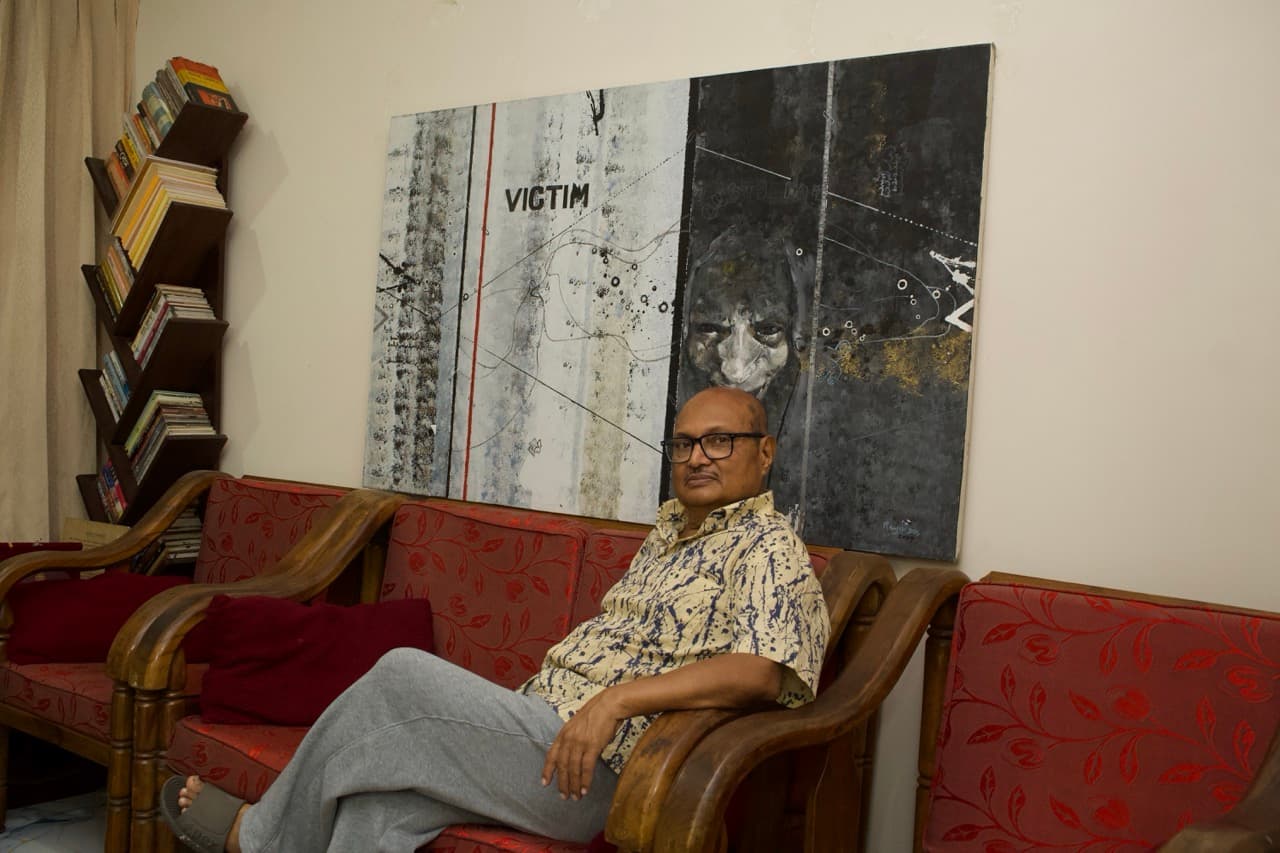
Of all the artists we have spoken with for our features, Ratneswar Sutradhar is probably the one whose schedule we discussed the most — it changed again and again before we finally managed to meet him. When we arrived at his home, he had just woken from our phone call; barely a minute later, the doorbell rang. Wearing a simple T-shirt and shorts, he opened the door and welcomed us. There was something effortlessly cool about him, even in such an ordinary moment. We sat down on the couch, our eyes wandering across the paintings hanging on the walls. Beside a bench stood a small sports bike belonging to his son, Ayushman Sutradhar — Borno to everyone who knows him — around six or seven years old, who had recently started learning music at Chhayanaut.
A little later, Ratneswar came back after freshening up and offered us dates. Then he quietly got up to check on Borno, to make sure he was still sleeping comfortably — his wife had already left for school that morning, so he was managing everything at once: being a father, an artist and a host. After tending to his duties he sat down with us, and casually asked whether he should change his clothes. Although he did go to change, somehow he seemed most comfortable in the shorts he'd been wearing when he first opened the door.
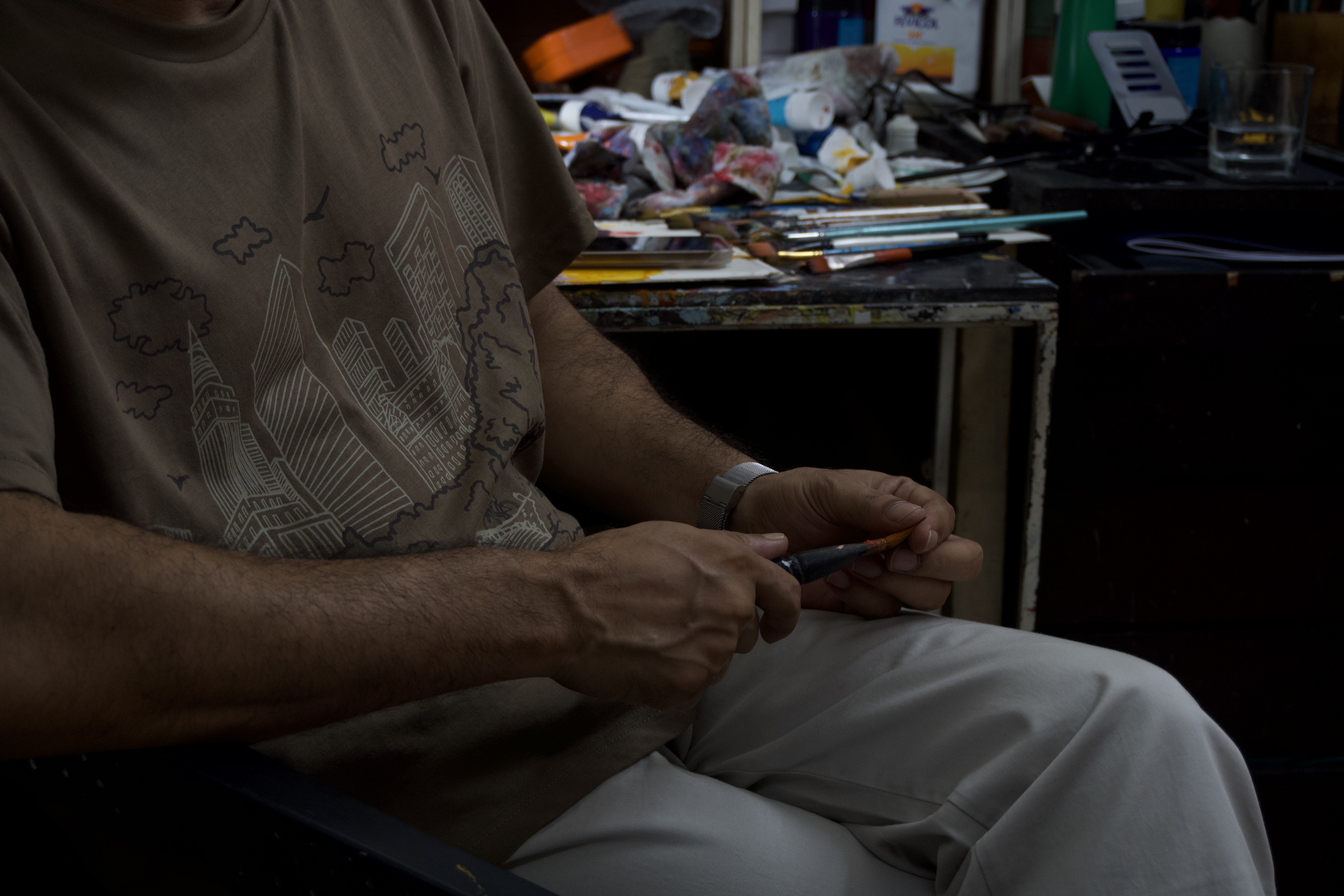
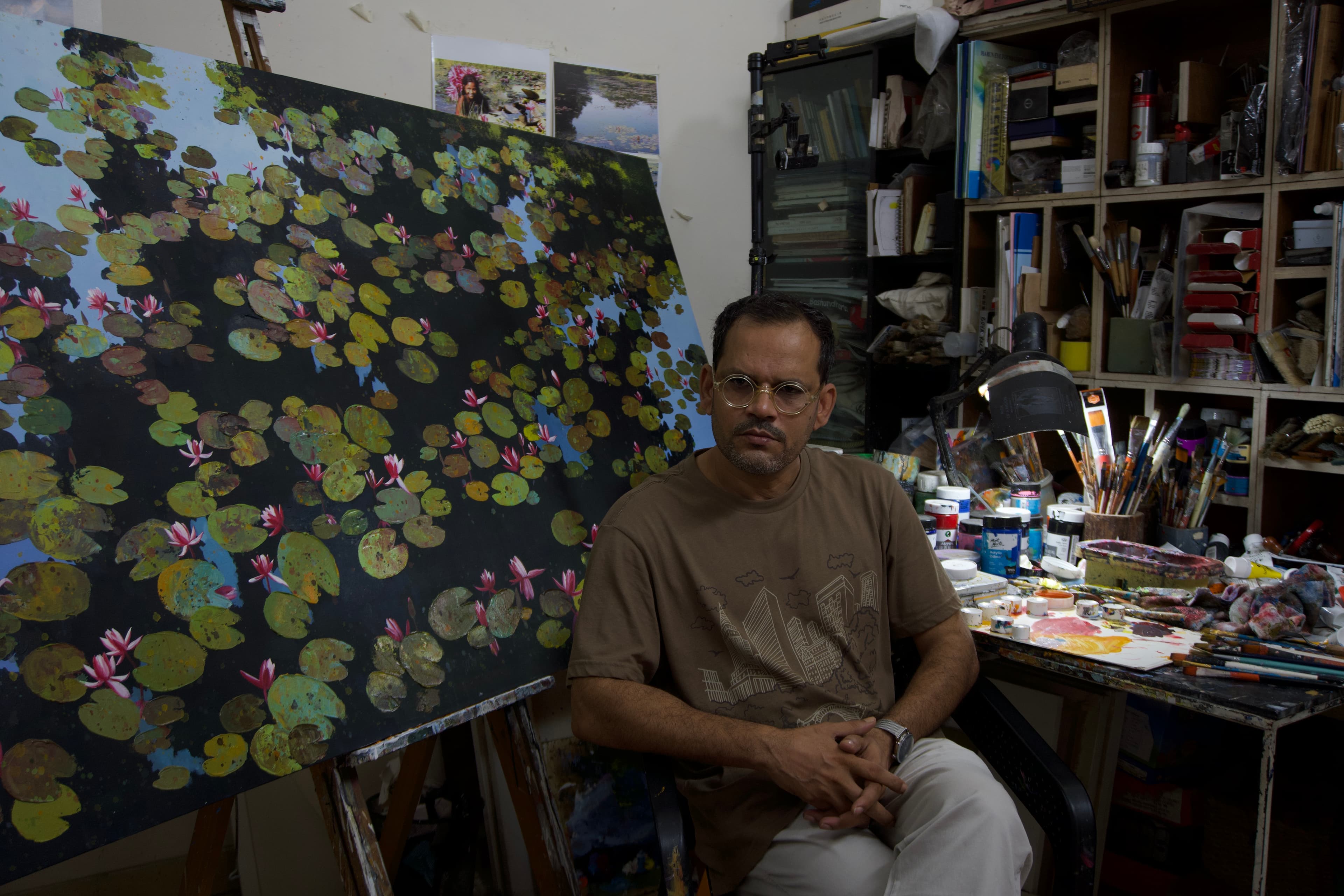
Sitting with him in his drawing space, it felt like there could not have been a better place to talk to an artist than inside his own studio. Being surrounded by that space while listening to him made the conversation feel even more special.
A small painting was resting on the easel, something he had been working on. Ratneswar usually works on large-scale canvases, so the room still felt incomplete without one of his lilies. We placed a larger lily painting on the easel instead, and the studio suddenly felt right. He sat down in front of it, surrounded by his own world.
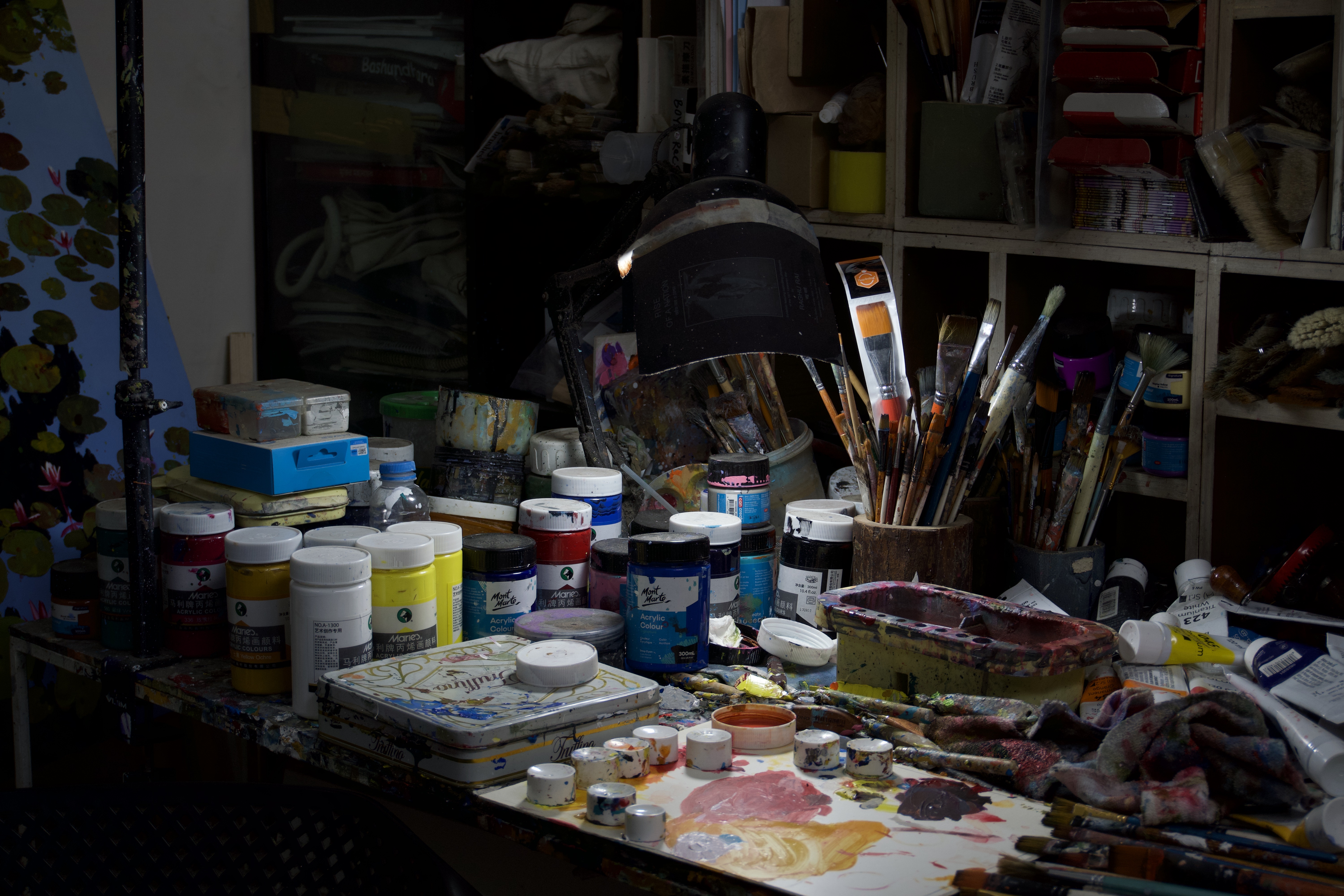
The room was filled with colour, brushes, documents, paintings on easels and artworks hanging on the walls — everywhere we looked, there was art. We felt completely immersed in it. Fahim could barely find enough space to move while taking photographs, simply because of how many paintings surrounded him. It was a beautiful kind of chaos.
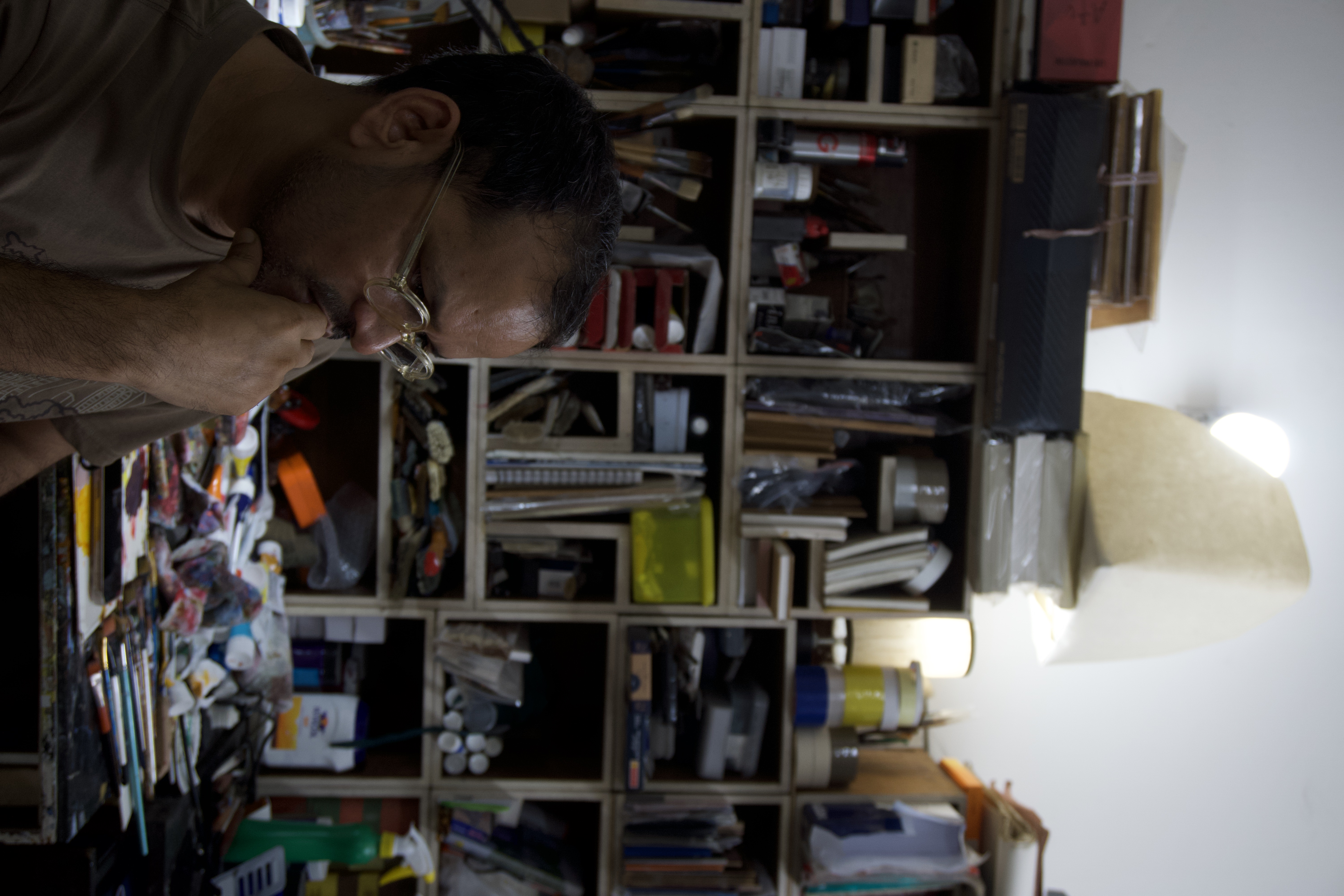
We have known Ratneswar for many years through his role as a teacher at Jahangirnagar University. At exhibitions, he is often seen arriving quietly, carefully observing the work on display — some might mistake this for distance, even arrogance. But often, the deeper a person's world of knowledge becomes, the more they enjoy spending time within it alone. Unless you spend real time with him, it's difficult to see that side of him.
We were curious about his academic journey. His decision to leave science behind came shortly after his SSC examinations — by then, he had already decided that fine arts would be his future. He initially passed the admission test for the Faculty of Fine Arts at the University of Dhaka, but after a question-paper leak, the exam had to be held again. He was outside Dhaka at the time and learned of the new date only a day before it took place, so he couldn't attend.
He enrolled in fine arts at Rajshahi University instead. Eventually he sat for the Dhaka admission test again and was admitted. He had also received an opportunity to study at Santiniketan, but chose to stay in Bangladesh, wanting to remain connected to the country's own artistic and cultural landscape.
After completing both his bachelor's and master's degrees at the University of Dhaka, he joined Jahangirnagar University as a teacher. Alongside teaching, he is currently pursuing a PhD — something that could probably have been finished much earlier, but time management has been difficult. Seminar dates have been postponed more than once for lack of time, and his own research sometimes waits while other responsibilities take priority. We hope he completes it soon.
Nature plays a central role in his work. His roots in the haor region of Sunamganj have shaped much of his artistic language — he grew up close to those vast wetlands, and traces of water, storms, open skies and water lilies run through nearly everything he paints.
“I grew up where the sky never felt caged,” he told us. “I grew up under the open skies of the Sunamganj haor. The lilies I paint are lilies I picked with my own hands — they come from my own experience. Later, when I came to Jahangirnagar, I found those lilies again. If I don't paint lilies, then who will?” As he spoke about lilies and water, it felt as though he were travelling back to his own childhood.
He still visits Sunamganj regularly. There, through his own initiative, he has established a library — a project born from a sense of responsibility toward his community. His goal was never to make everyone a reader; he simply wanted to create a space for even one person who genuinely wished to learn, grow and explore knowledge. The idea had stayed with him for almost eighteen years before he finally established the library in 2022, with twelve members. People now come there to read, exchange ideas and spend quality time in a healthy environment — young people gathering there instead of drifting elsewhere, which is exactly what he'd hoped for. Whenever he visits home, much of his time is spent in that library.
As we listened to these stories, we found ourselves wishing that one day we could visit Sunamganj and sit with him there — talking about lilies, landscapes, and his Pixel Error series.
We had been curious about Pixel Error for a long time; every time we'd seen those works, they left us fascinated. The idea began during his master's studies, when he was searching for a new artistic language but unsure where to begin — he felt a lack of guidance and direction. During that period he met a teacher from Santiniketan who later became like an elder brother to him, someone who understood the struggle he was going through and offered real support and encouragement. That guidance eventually helped him find his own path.
In his living space back then, an old monitor sometimes produced distorted, pixelated images. Watching those visual disruptions led him to a new way of thinking — two visuals held in mind at once, one representing the conscious mind and another the subconscious. When those two layers came together, they created a third state. From that idea, Pixel Error gradually emerged.
In that moment we also understood why he gives so much time to his students — he grew emotional talking about this part of his own journey. During his student years he often felt the absence of proper guidance, and today he doesn't want his students to face that same uncertainty.
One of his most remarkable works from the Pixel Error series is a tribute to the Biranganas of Bangladesh's Liberation War, built from nine hundred small canvases. It's one of those pieces that leaves a lasting impression — the more you look at it, the more powerful it becomes.
While we were still absorbed in the paintings around us, a small face suddenly appeared from behind a canvas. Borno had woken up.
Sir called him over, and Borno climbed onto his lap. The conversation turned, naturally, to the responsibilities of fatherhood. Borno has started to understand things a little better now — when his father asks for ten or fifteen minutes to finish a painting, he agrees quietly, which wasn't possible a few years ago. He has a real emotional connection to the paintings now; sometimes, when his father wants to sell one, Borno asks him not to. Maybe one day he'll understand that a painting's real beauty lies in reaching people, in being seen by others.
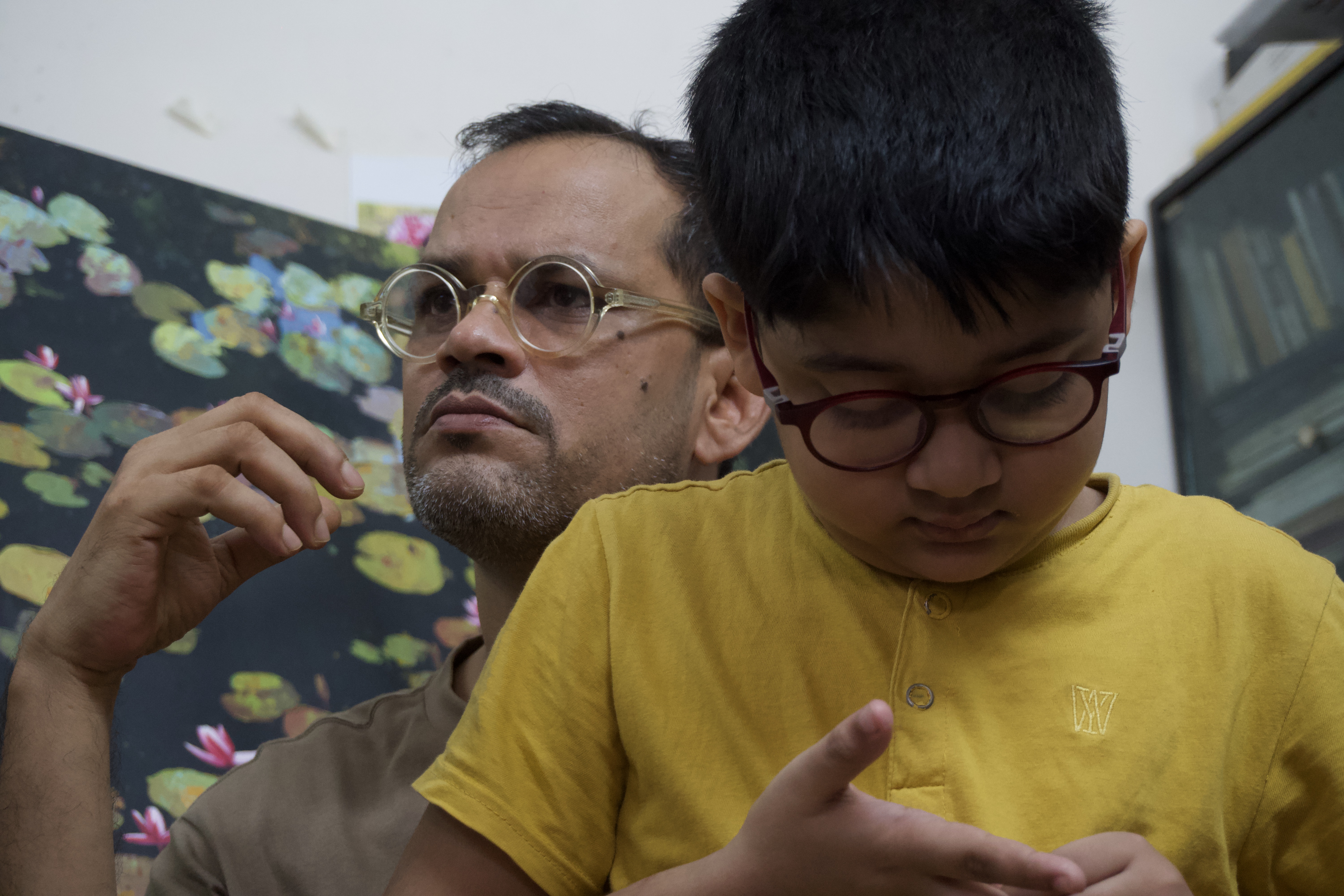
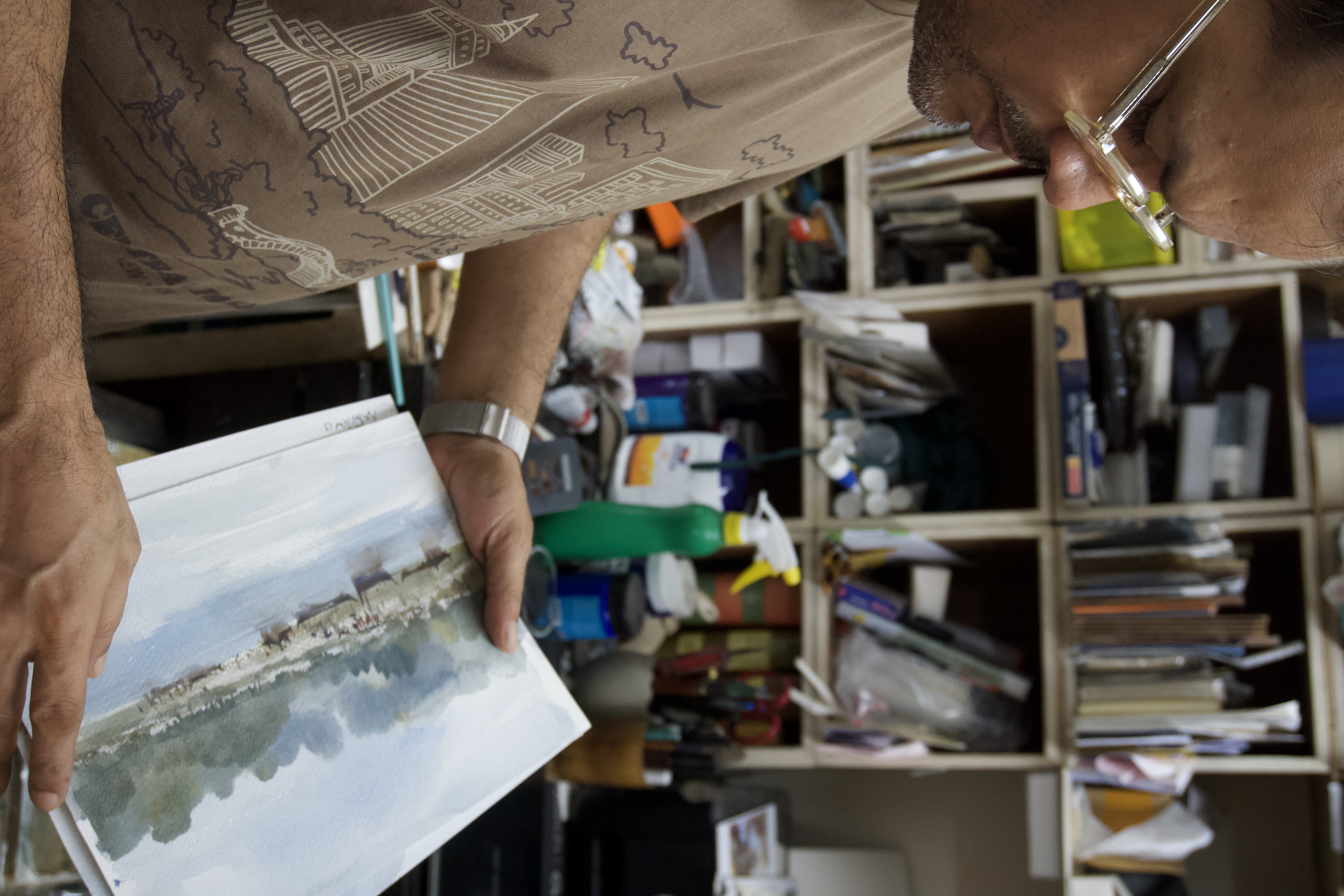
Sir excused himself to make Borno's breakfast. Before leaving, he handed us a collection of his own artworks — each piece carefully wrapped, documented and preserved. We spent our time looking through them one by one: travels across different countries, outdoor painting sessions on water, memories captured in colour and brushstroke. Every piece seemed to tell its own story.
Many of these works can be seen online, but holding the original paper in your hands is an entirely different experience. Seeing a painting on a website or in a gallery is one thing; holding the actual artwork, observing every detail up close, is something else altogether.
After finishing Borno's breakfast, he returned and began sharing the stories behind those paintings. Until then we had simply been looking at them — now we were beginning to feel them. Soon after, Ma'am returned home. Sir introduced us, and we were struck immediately by how warm and welcoming the whole family was.
Ma'am invited us for tea, and while we waited, we sat together discussing art, visual culture and much else. Meanwhile, Rup Roy was playing cricket with Borno using a sponge ball — Borno hit so many sixes he was nearly exhausted, sweat rolling down his forehead. At one point, caught up in the moment, Sir asked him to sing a song. Borno had only recently joined Chhayanaut, but he was clearly enjoying music already; we expected a few lines and then a stop. Instead, he surprised all of us by singing the entire thing.
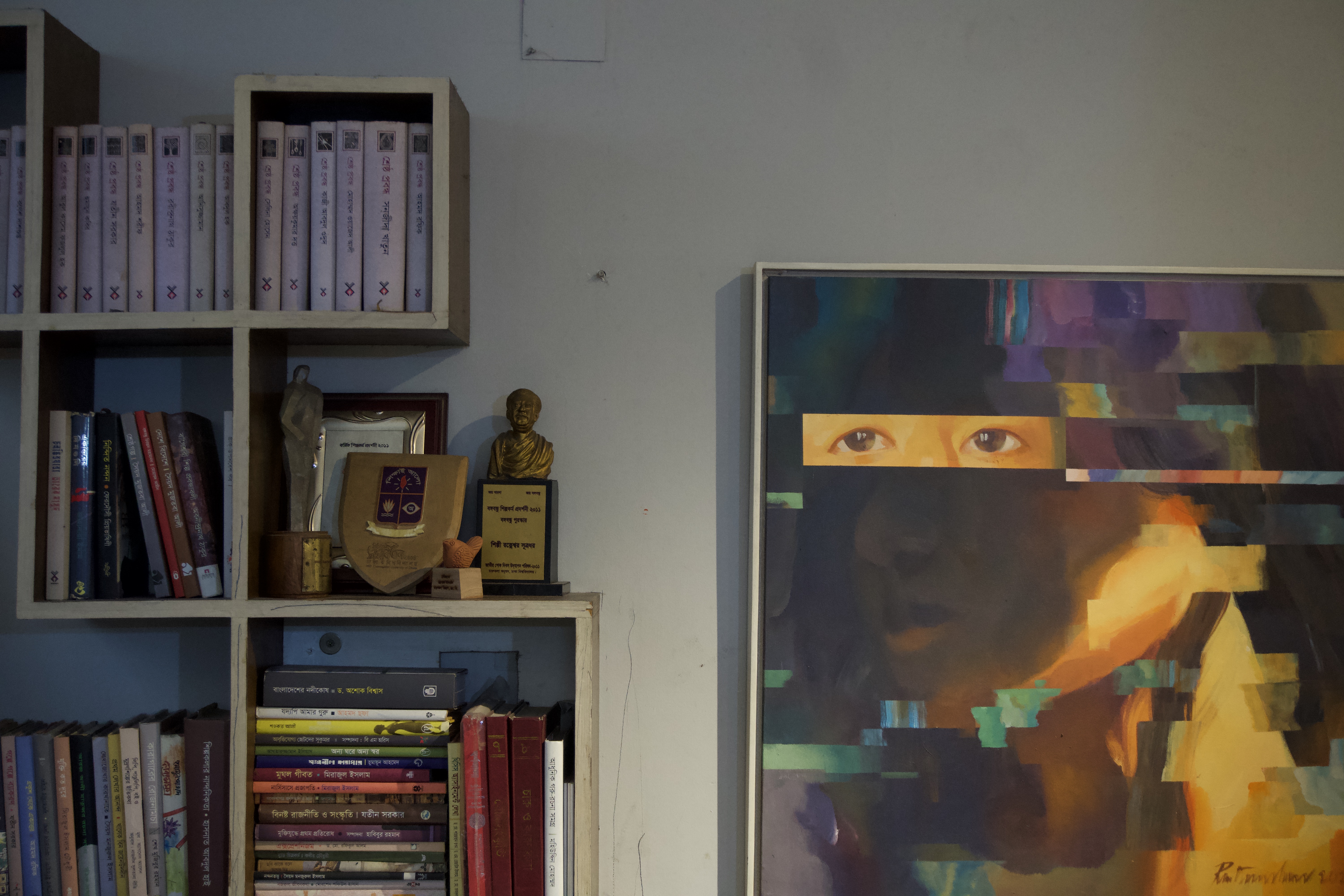
Before he'd even finished, Ma'am arrived with tea — a wonderfully refreshing cup, accompanied by so many snacks that there was barely any room left on the table. We eventually had to ask her to stop bringing more food. Time slipped away unnoticed. With cups of tea in hand, we kept talking and listening, gradually blending into the rhythm of the afternoon.
Perhaps Ratneswar Sutradhar will always remain this way — a little serious from a distance. In person, an entirely different man.