The Odyssey of Artist Mohammad Iqbal
In 1971, a four year old boy, Mohammad Iqbal, watched a war reduce his world to dust. Decades later, in a newspaper, he saw the same suffering on a different land, and the memory came rushing back. Today, the faces of children on his canvases look out at us with silent, steady eyes. There is no scream in them. Yet the whole world’s grief gathers there.
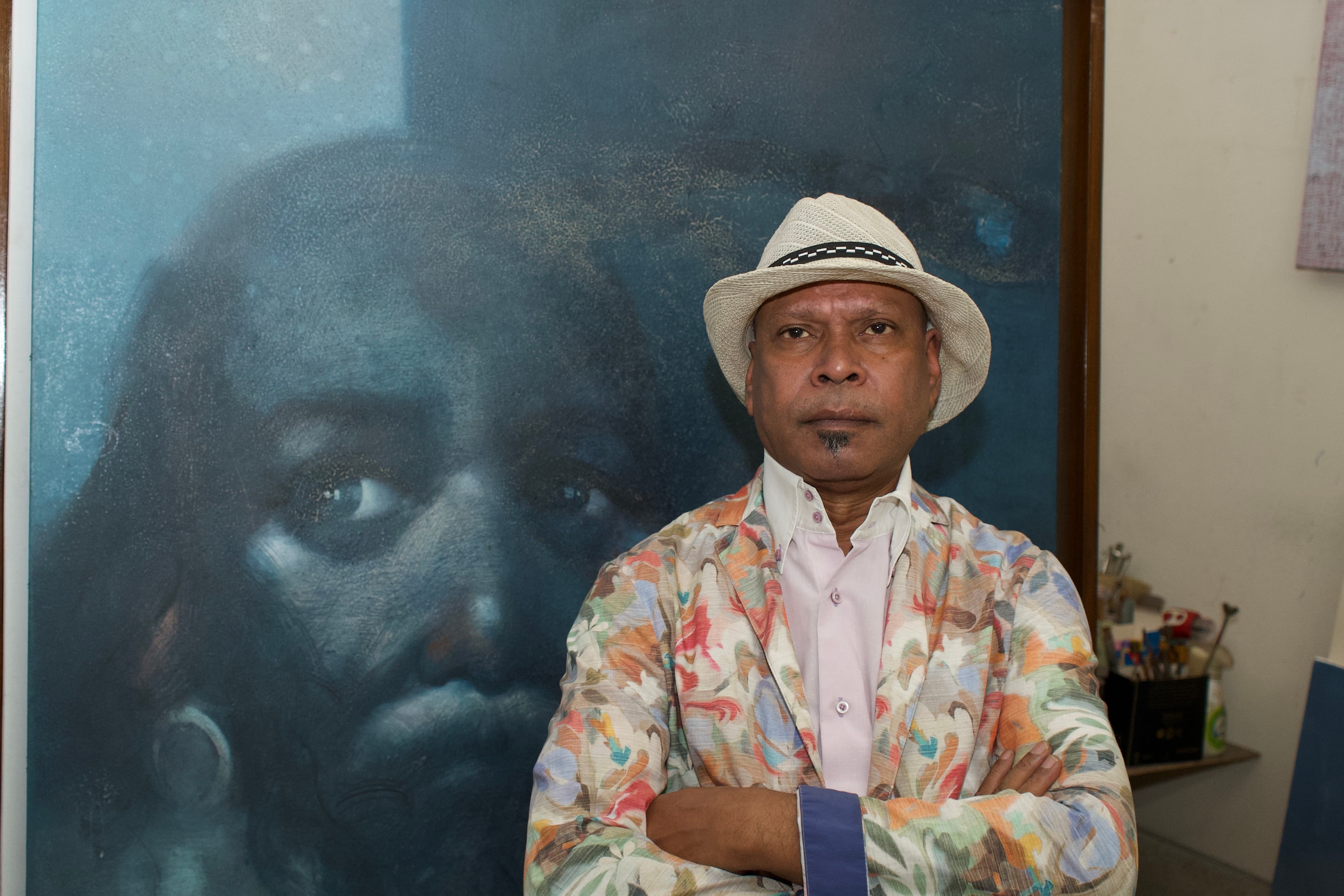
Mohammad Iqbal's journey carried him from the courtyard of Dhaka’s Fine Arts to Nagoya, Hiroshima and Tokyo University of the Arts. He learned a new language, earned Japan’s Grand Prize and, in the end, a place among the finest artists of his generation. But the lesson he treasures most is a quiet one: “A prize is not for pride. It is for digesting."
If you ever stand before a massive canvas inside a quiet gallery space and find yourself transfixed by the towering face of a child gazing back with a serene unsettling stillness, you are standing in the world of Mohammad Iqbal. There is no dramatic outcry or exaggerated plea in those eyes. Instead, they hold the quiet weight of conflict, displacement, and the enduring human condition. Beneath the thick, carefully applied layers of oil paint lie delicate, hand-engraved lines that are far more than mere technique; they are a visual map of memory and lived experience.
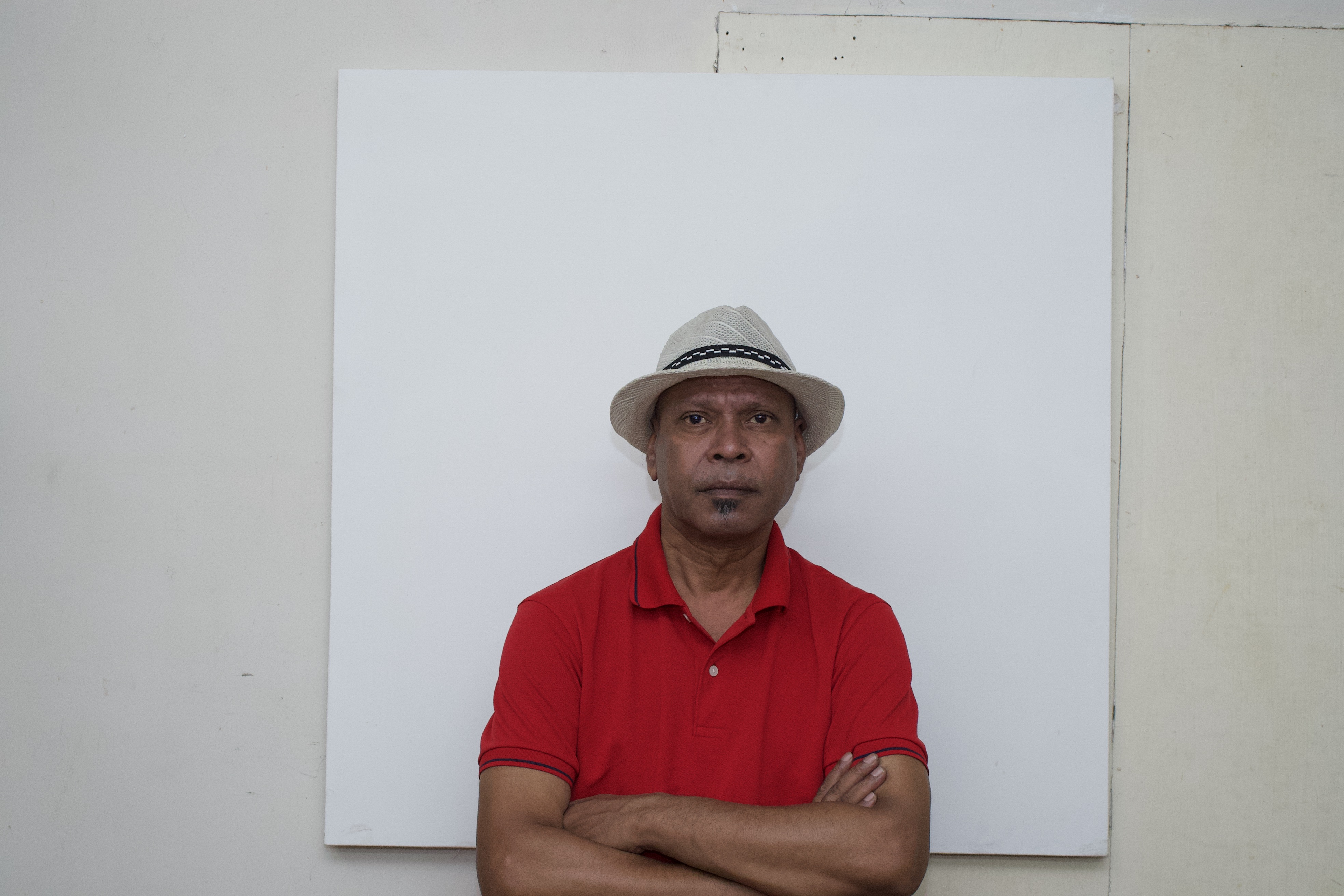
What shapes a true artist? What invisible fire guides their brush? Mohammad Iqbal’s journey, from the verdant courtyards of Dhaka University’s Faculty of Fine Arts to the academic peaks of Hiroshima City University and Tokyo University of the Arts, is not merely a timeline of international awards and accolades. It is an artist’s lifelong quest to confront personal trauma, translate it into a universal visual language, and remain profoundly grounded despite global recognition.
Art holds a quiet power: it refuses to forget. The moments we try to bury in the recesses of memory are often the very truths an artist brings back to light on canvas. For Mohammad Iqbal, this creative turning point was forged in early childhood.
In 1971, at just four years old, he witnessed the devastating realities of war. He saw his family business and home destroyed in an instant, forcing his family to flee the city for a remote village near the Indian border. Months spent living as a displaced child amid the chaos left an indelible mark on his young mind.
Decades later, as an established artist reading the news, an image of a child amidst the rubble of conflict in Palestine brought those childhood memories flooding back. He realized that while geography and time change, the tragic toll on innocent lives remains constant. This realization inspired his iconic series of large-scale children's portraits—canvases that serve as silent yet powerful inquiries into humanity’s conscience.
Searching for Stories in Old Dhaka and Rural Fairs
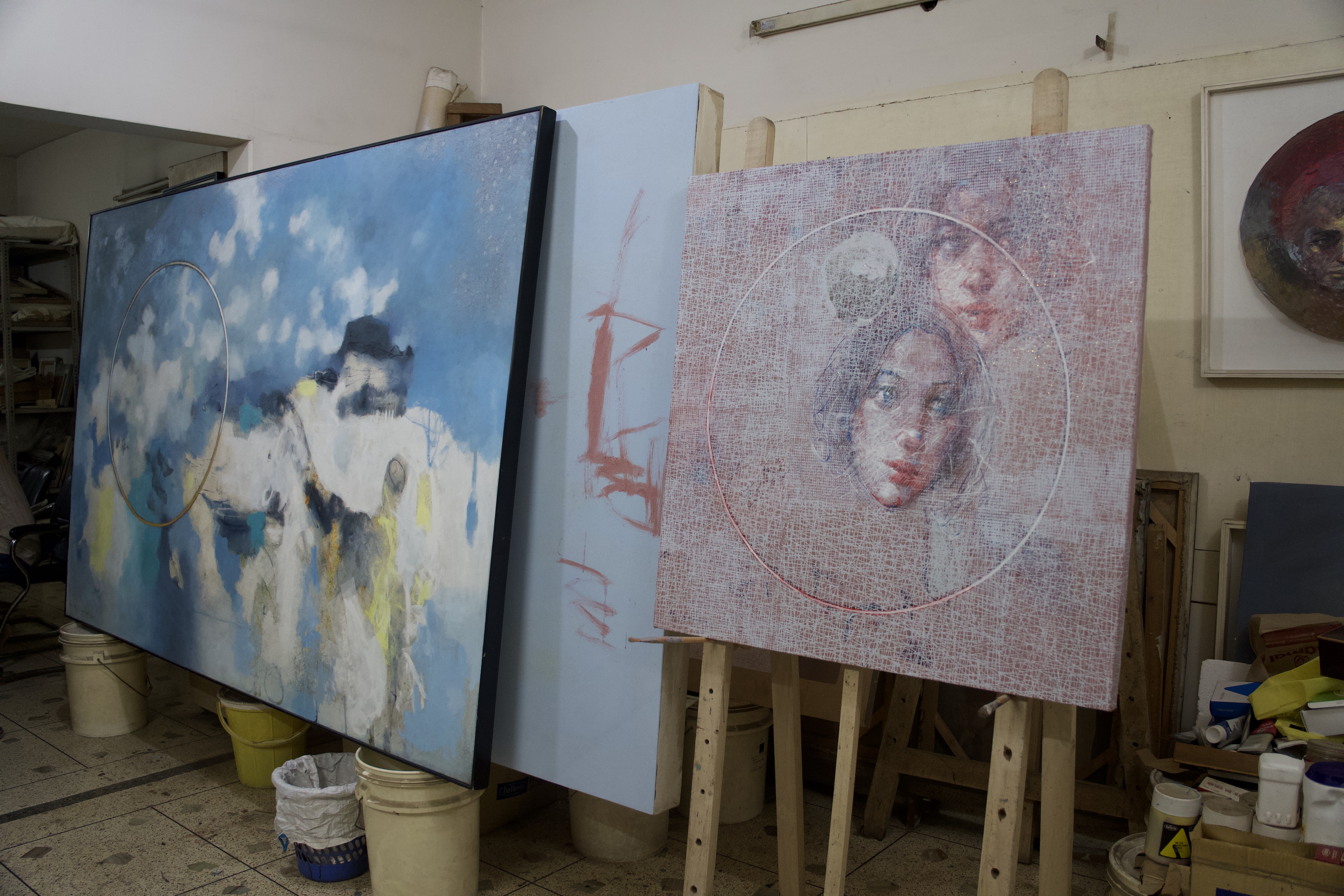
The Faculty of Fine Arts in the 1980s was defined by intense creative energy and a restless search for authentic subjects. Students often ventured out after hours to observe life firsthand. While preparing for annual exhibitions, Iqbal spent his evenings at the Kamlapur Railway Station, sketching the weary figures resting on the platforms to capture the authentic anatomy of human fatigue. His search for life in its rawest form took him from the bustling markets of New Market to the banks of the Buriganga River. This keen eye for human detail eventually led him to a small, makeshift shelter under a banyan tree across from the art institute. There lived a nomadic follower of a local ascetic, a man who is detached from societal norms, wearing a red cloth around his head and living completely in his own world. Observing this figure inspired Iqbal to look deeper into the philosophy of nomadic existence. To understand this world better, he traveled to the Beltoli Fair in Comilla, where the unfiltered, eccentric expressions of human spirituality gave birth to his celebrated Baul and Nomad Series. Mohammand Iqbal’s artistic process goes beyond conventional brushwork. Over years of experimentation, he developed a distinctive approach to oil painting. Rather than applying thick paint all at once, he builds his compositions using seven to eight thin, translucent layers of oil color. While the paint is still wet, he uses a sharp needle tool to physically engrave directly into the canvas. This deliberate scratching exposes the hidden colors of the underlying layers, creating a textured, sketch-like quality. Because this technique can only be done before the paint dries, it requires speed, precision, and immense physical effort. This combination of calligraphic precision and tactile depth became his signature artistic identity.

In 1999, Iqbal moved to Japan on the prestigious Monbusho Scholarship, marking a pivotal turning point in his life and art. Adapting to Japan meant immersing himself in a new culture and mastering its complex linguistic landscape. Alongside his studies, he began teaching drawing to local Japanese residents through a cultural exchange program at the International House in Hiroshima. Teaching these older students not only provided a modest income but also built meaningful friendships that helped him navigate Japanese society and academia. His move to Japan also transformed his color palette. In Bangladesh, limited access to high-quality materials often forced him to work with darker tones. During a solo exhibition in Nagoya, a gallery owner noticed the contrast between his earlier dark-toned work and his vibrant new pieces. Iqbal realized that the clean environment, serene landscapes, and abundance of fine art materials in Japan had subtly brought light and vibrancy into his work. After earning his Master's degree, he continued his studies at Hiroshima City University. Surrounded by a city dedicated to peace, he returned to his figurative style, creating large-scale portraits of children focused on themes of universal humanity.

Iqbal's journey in Japan was not without its trials. Near the end of his doctoral studies in Hiroshima, his supervising professor retired, leaving his academic progress uncertain despite having won the Taisho (Grand Prix) at a prestigious national competition in 2005. Instead of giving up, Iqbal reached out to a professor at the renowned Tokyo University of the Arts who had served on the jury panel for his earlier award. When they met, the professor showed him a file of newspaper clippings featuring Iqbal’s work and admitted the jury had been astonished to learn that the grand prize winner was an international artist. To enter the doctoral program at Tokyo University of the Arts, Iqbal first enrolled as a research student. He passed a rigorous entrance process involving written exams, a presentation of ten large-scale paintings, and an extensive interview in Japanese. Upon completing his Ph.D., he was awarded the Nomura Shoken Award, given to the top doctoral graduate across all fine arts disciplines. During his final dissertation presentation at the university museum, he addressed an audience of over two hundred professors, curators, and art enthusiasts, delivering his lecture entirely in Japanese.
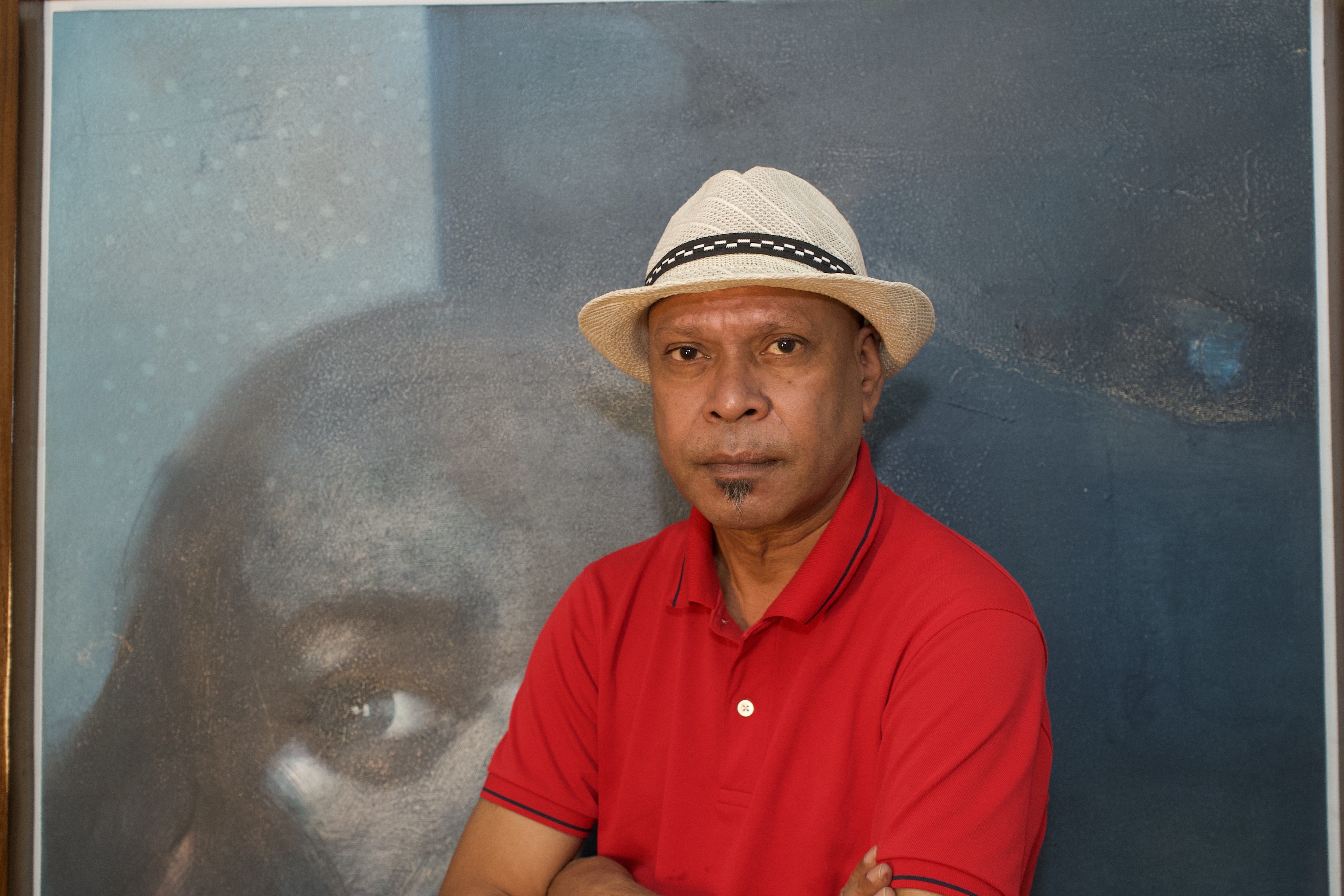
Despite receiving international acclaim, major prizes, and high honors within the Japanese art establishment, Iqbal remains remarkably humble. Reflecting on his journey, he often notes that receiving an award is not an occasion for pride, but an invitation to practice humility. He believes that when vanity takes over, the true spirit of an artist fades. Today, Mohammad Iqbal is more than an internationally celebrated painter. His life is a testament to how personal hardship can be transformed into meaningful art, how perseverance overcomes obstacles, and how true mastery is defined by quiet grace. Through his engraved canvases, the gentle faces of those children continue to speak to the world, offering a timeless message of peace and shared humanity.