The Art of Empathy
An artist's relationship with the world often shows in what they choose to paint. For Kanak Chanpa Chakma, that relationship runs through people, cultural memory and the landscapes of the Hill Tracts. Her canvases hold indigenous life, women's experience and the natural world. Beyond the studio, another side of her life speaks just as clearly: her devotion to the care of animals.
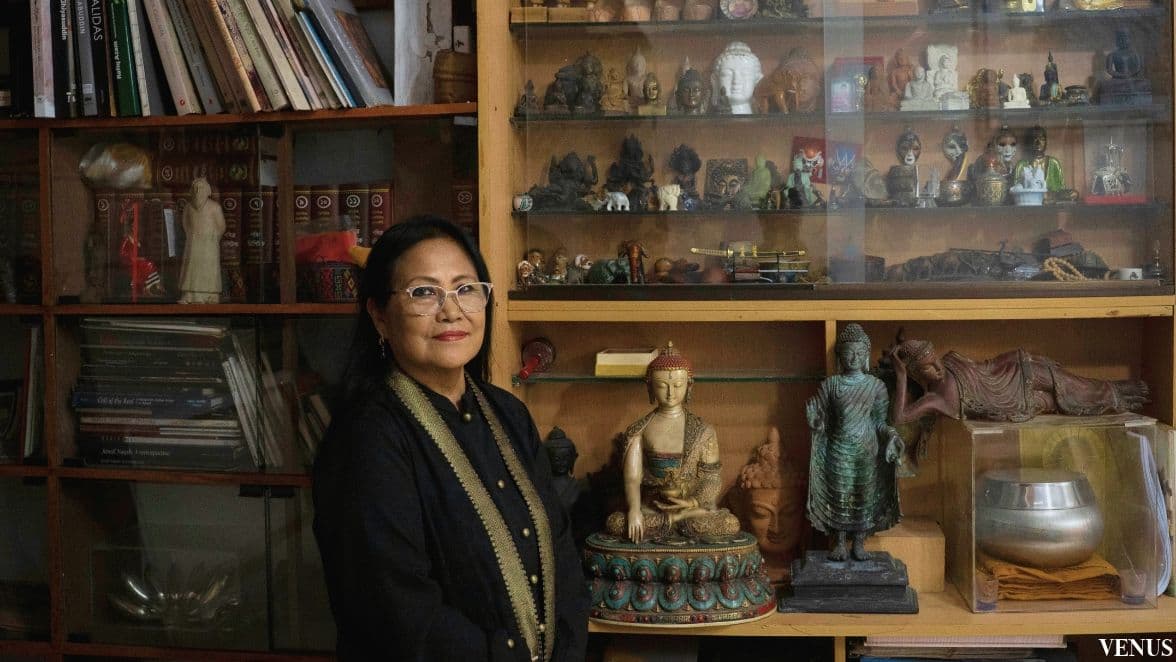
Every year, many students arrive in Dhaka to become artists. They enrol, try different mediums and take their first steps into the art world. Entering the field, however, is one challenge; staying in it is quite another. Only a few remain committed to their practice over the decades. Kanak is one of them. But how much do we really know about the time, effort and resolve behind the artist we recognise today?
Building a life in art in a South Asian society is never only about learning to paint. It means navigating social expectations, financial uncertainty and the responsibilities that so often compete with a creative career, particularly for women. For a woman from an indigenous community, arriving in Dhaka to study fine arts meant facing several of these realities at once.
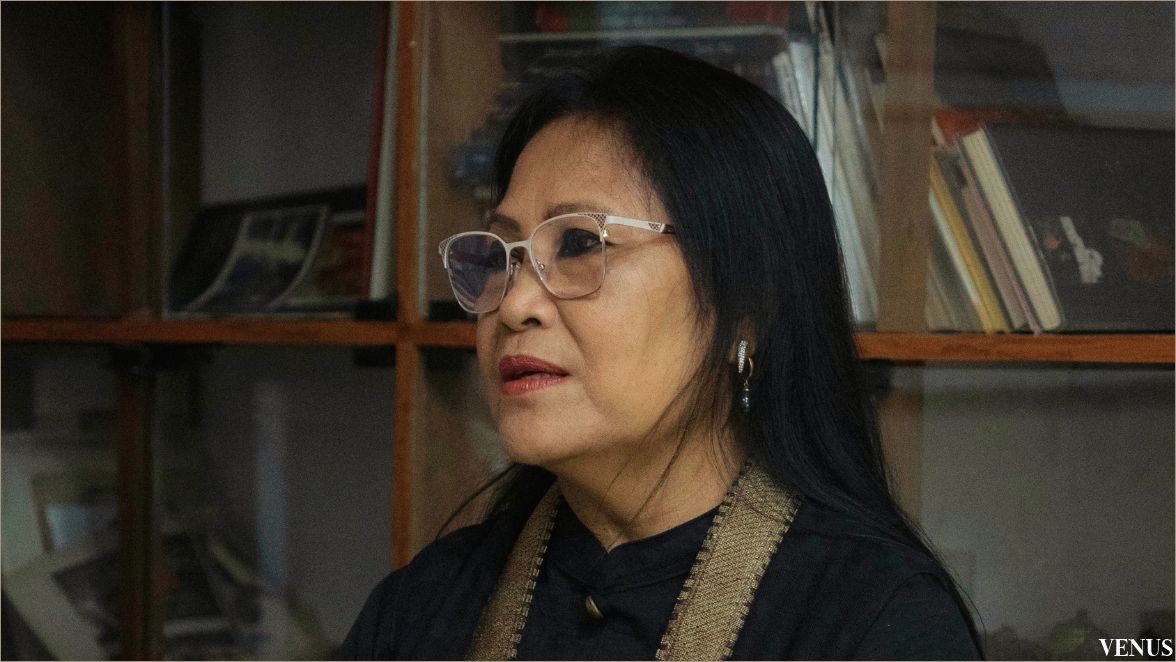
Imagine leaving Rangamati and a familiar cultural world behind, and stepping into a city whose rhythms are entirely different. As a young Chakma woman studying art in Dhaka, Kanak had to find her footing in unfamiliar surroundings. Moving through the city and joining outdoor art activities was not always an ordinary sight to those around her, and her presence in public spaces sometimes drew unusual attention. These moments offer a glimpse of the world in which she was shaping her artistic identity.
Kanak was born in 1963 in Tabalchari, Rangamati. She grew up among hills, forests and water, and among the everyday traditions of her community. These became the foundation of her visual memory, and they give her work its lasting sense of place. Her first teacher was her mother, a skilled textile designer and weaver. Through her, Kanak met pattern, colour and natural dyes early on. Watching her mother work shaped the way she would come to see the color. Starting to play with colors.
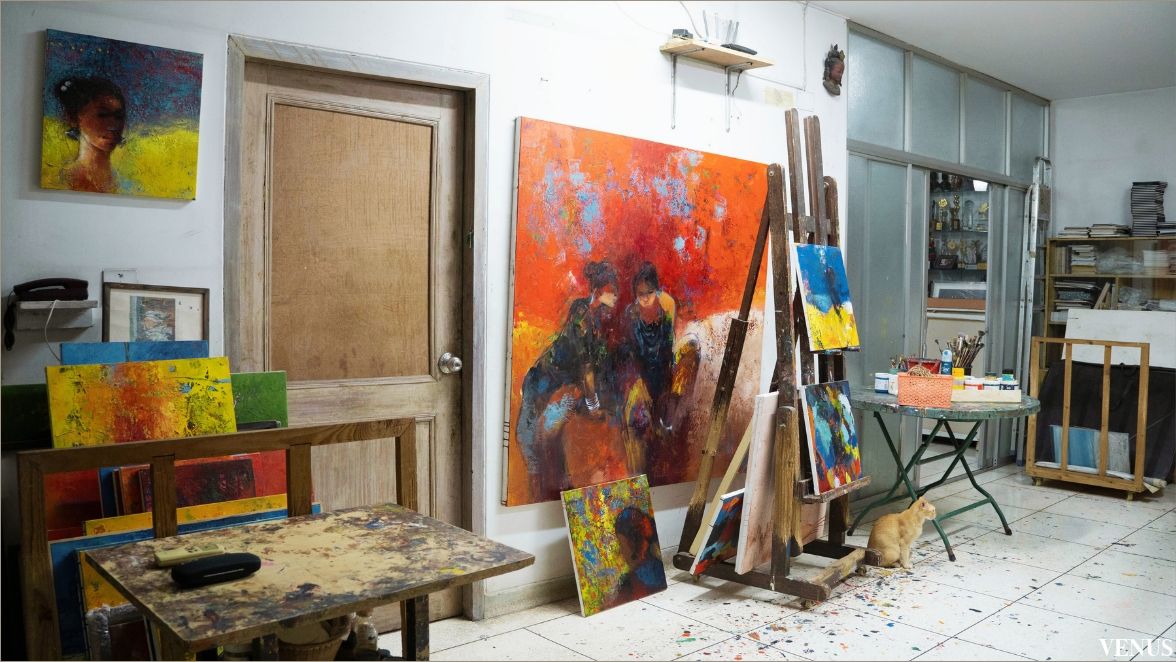
Kanak Chapa studied at the Faculty of Fine Arts, University of Dhaka, and later received a fellowship to study at Pennsylvania State University in the United States in 1993–94. Her language as a painter grew from formal training, lived experience and patient cultural observation. Expressive colour, semi-realistic figures and abstract elements come together in an approach that is unmistakably her own.
Women appear again and again in her compositions. They carry the social and cultural realities of indigenous communities: daily responsibilities, traditions, quiet endurance. Yet Kanak does not let them stand merely as symbols of identity. She attends to each figure's individual presence and circumstance. Her paintings also understand the complexity of life in the Hill Tracts. The region is often celebrated for its beauty, but her work acknowledges the struggles that exist alongside it. This commitment to everyday reality makes her paintings both personal and socially aware.
For her, painting begins in observation and memory. The landscapes and people she portrays come from a deep familiarity with the world she grew up in, and they speak across cultures without losing that source.
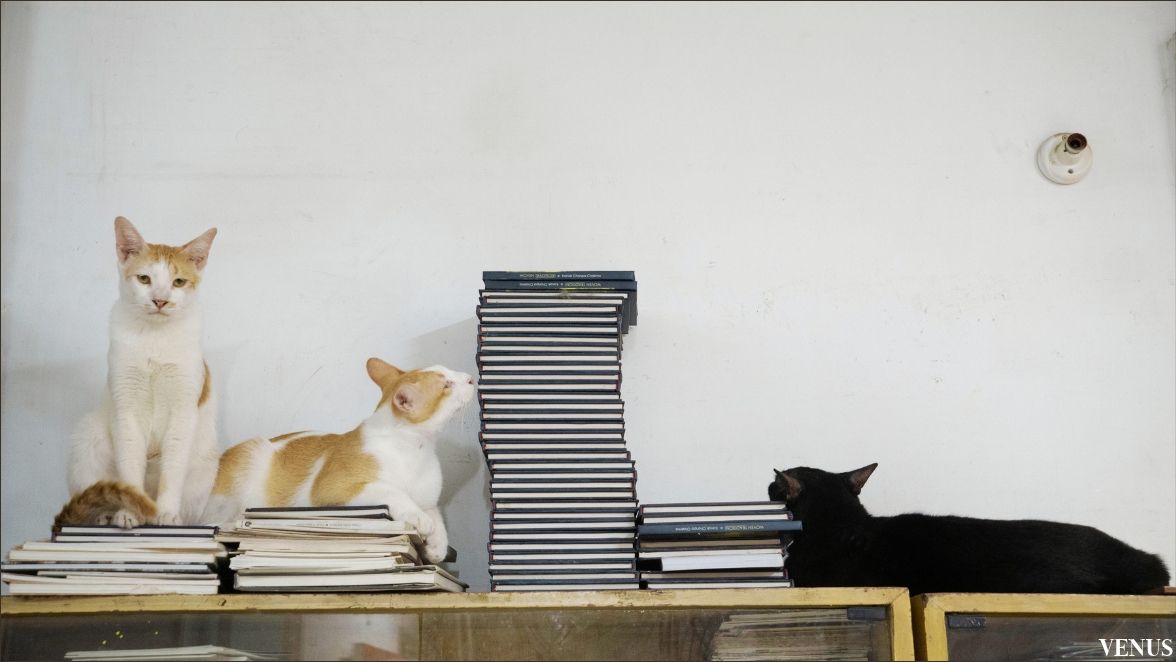
Animals hold an important place in her life. Her home is shared with cats, and her care extends to strays. She feeds street animals, rescues them and arranges medical treatment, particularly for cats and dogs. She also supports neutering efforts and helps animals that have little access to food, shelter or veterinary care.
She believes that both pets and stray animals deserve to co-exist with human beings. Her view is simple: animals deserve care and consideration, whether or not anyone owns them. Street animals face hunger, illness and hostility, and meeting those needs takes more than sympathy. It takes steady involvement and practical responsibility. Her concern comes from an awareness of vulnerability and a respect for every form of life.
Painting and animal welfare are different pursuits, yet both depend on close attention to the world. In her art, Kanak gives visibility to people, traditions and experiences that deserve to be seen. In her daily life, she gives care to those who might otherwise go unnoticed.
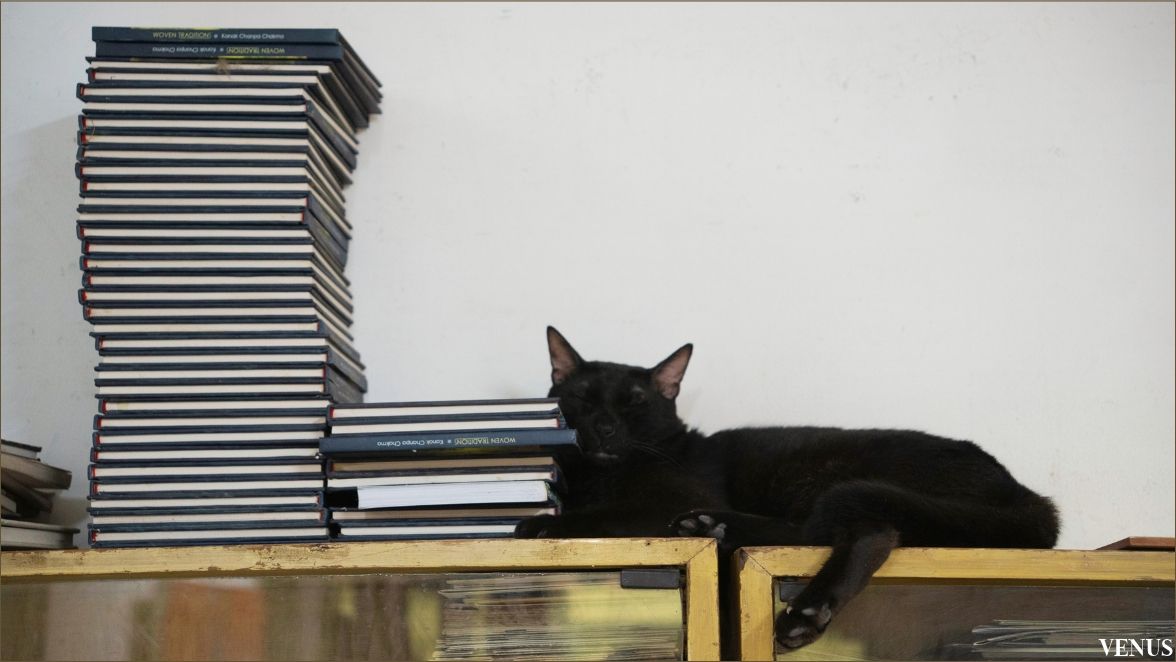
Her childhood in Rangamati offers a clue. Growing up so close to nature meant living in a landscape where human communities and other living beings shared the same space. That understanding still shapes how she sees her surroundings: her paintings reflect the bond between people and environment, and her work with animals turns the idea of coexistence into practice.
The link between artistic sensitivity and compassion is not easy to define. In Kanak's case, though, the connection feels natural. Both demand attention, patience and an understanding of lives beyond one's own.
A Journey That Continues
Over the years, Kanak has taken part in many exhibitions in Bangladesh and abroad, and her work has been recognised in countries including the United States, China and Uzbekistan. Among her notable honours are the Olympic Fine Arts Medal, (Beijing, 2008), and the Ekushey Padak in 2023 for her contribution to fine arts.
Yet her life offers more than a list of achievements. Her paintings preserve memories of people, places and cultural experience. Her care for animals extends that same attentiveness into action. Art lets her explore and express what she observes; compassion lets her act on it. Together, they reveal a creative identity rooted in nature, human experience and everyday responsibility.
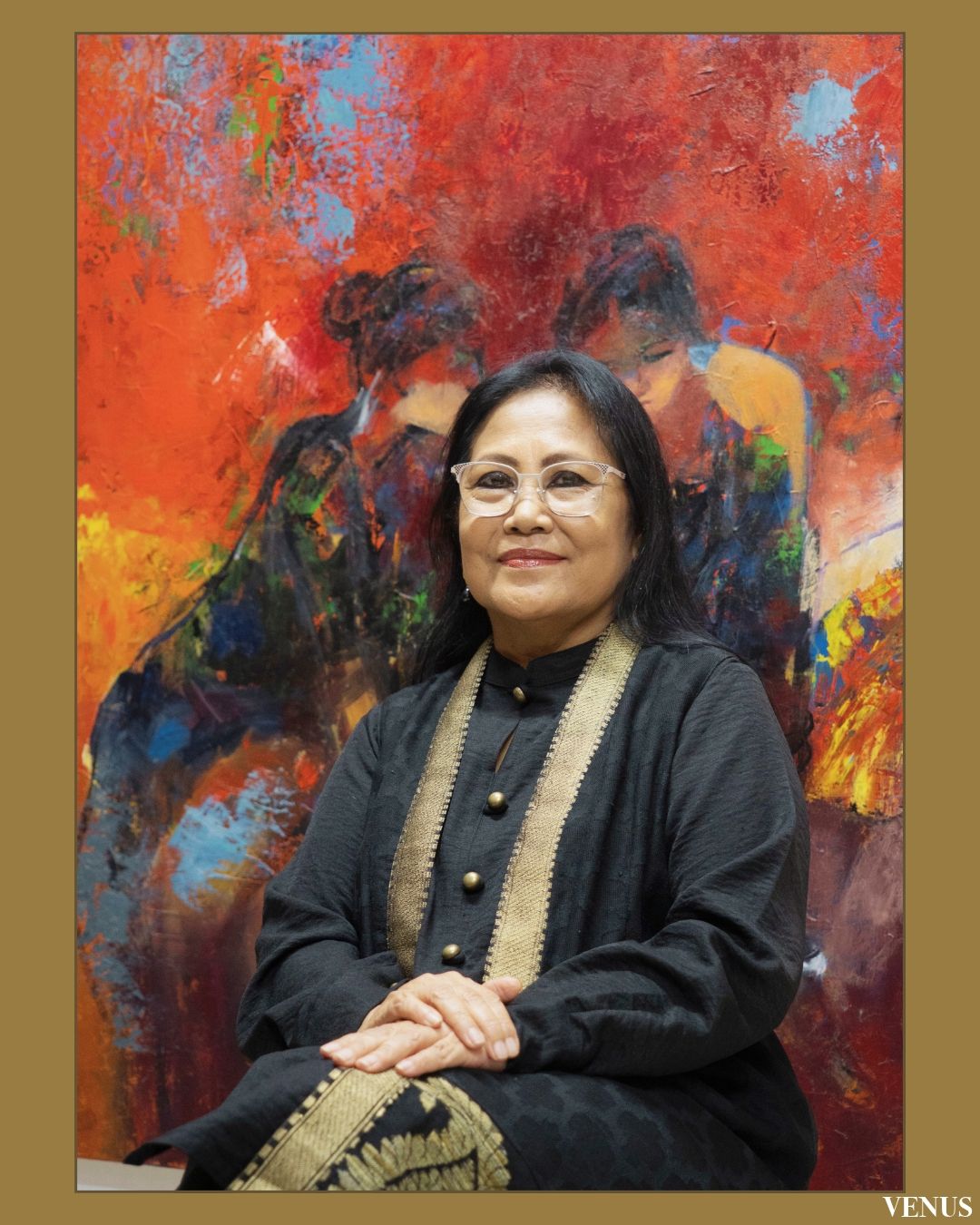
Kanak Chanpa Chakma's journey from Rangamati to the international art scene is an important contribution to the visibility of indigenous artists in Bangladesh. Through her paintings, she continues to draw attention to the cultural identity, experiences and artistic traditions of the Hill Tracts, and her career shows the value of holding on to a personal artistic language while engaging with a wider art community.
In a field where entering an institution is only the beginning, sustaining a career over decades is a different achievement altogether. It demands patience, consistency and the will to keep creating through uncertainty and change. For a woman artist from an indigenous community, it also means negotiating social expectations and claiming a place in a fiercely competitive art world.
Recognition may secure an artist's place in history, but the journey behind it tells us far more about the person. Hers is a journey shaped by cultural belonging, artistic discipline, personal conviction and compassion. Becoming an artist is one achievement; continuing to live and work as one, on one's own terms, is another.