Pieces Of Jamal Uddin
A visit to Jamal Uddin Ahmed’s studio offers more than an opportunity to view paintings. Explore the artist’s working process, personal history, lifelong friendships, and the quiet rhythms of everyday life that shape his practice. Through decades of artworks, cherished memories, and the atmosphere of his Elephant Road studio, the visit becomes a journey into the world behind the canvas.
Visiting artists' studios has gradually become an addiction for us. Every time we think we may take a break, another studio opens a new door into an artist's world. Recently, that journey brought us to the Elephant Road studio of Jamal Uddin Ahmed.
Many artists had suggested visiting Jamal Ahmed studio at least once. Our curiosity had already been growing, and after seeing his works in The Long Present at Bengal, Jamal Ahmed himself invited us to his studio. We couldn't resist.
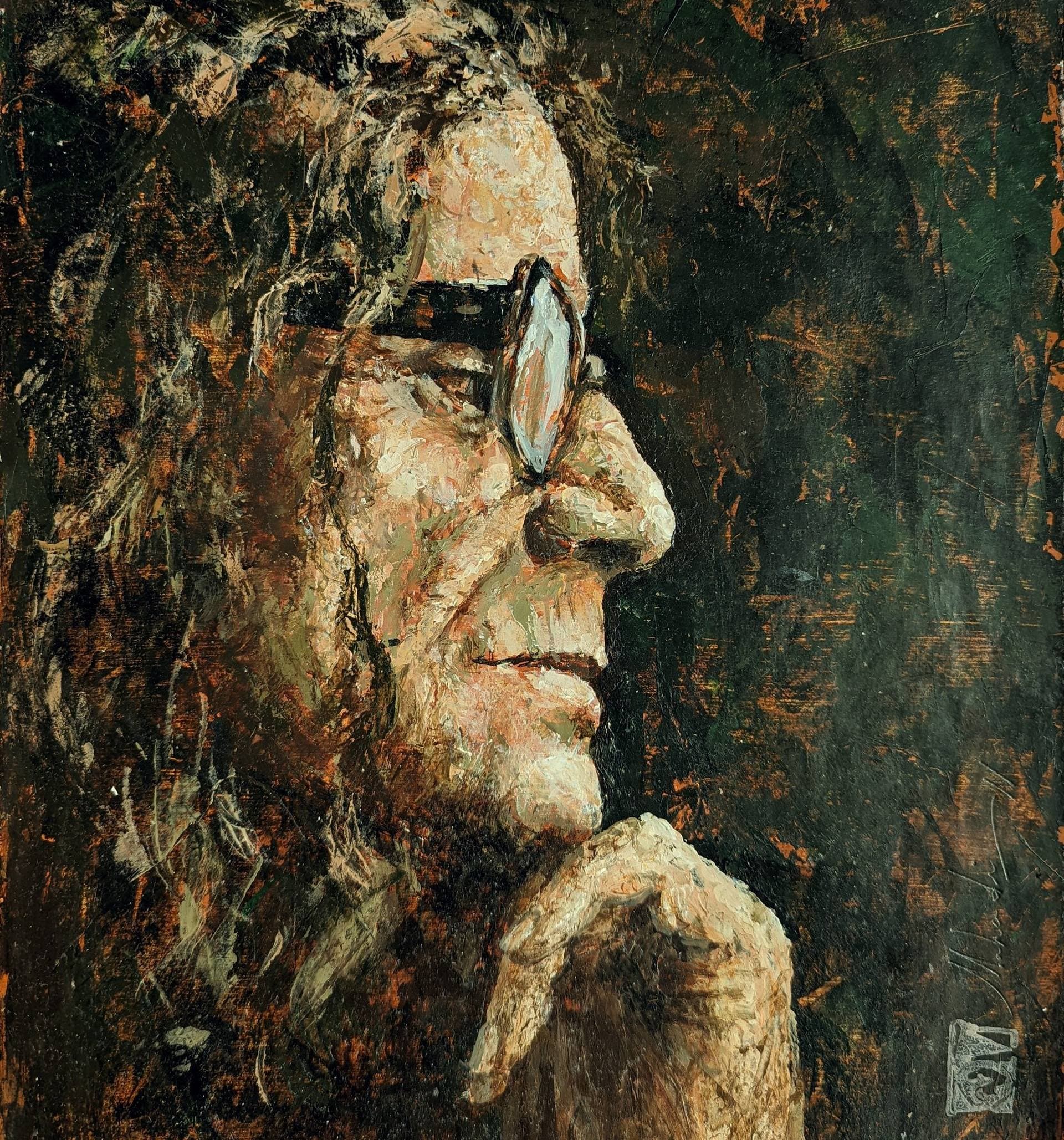
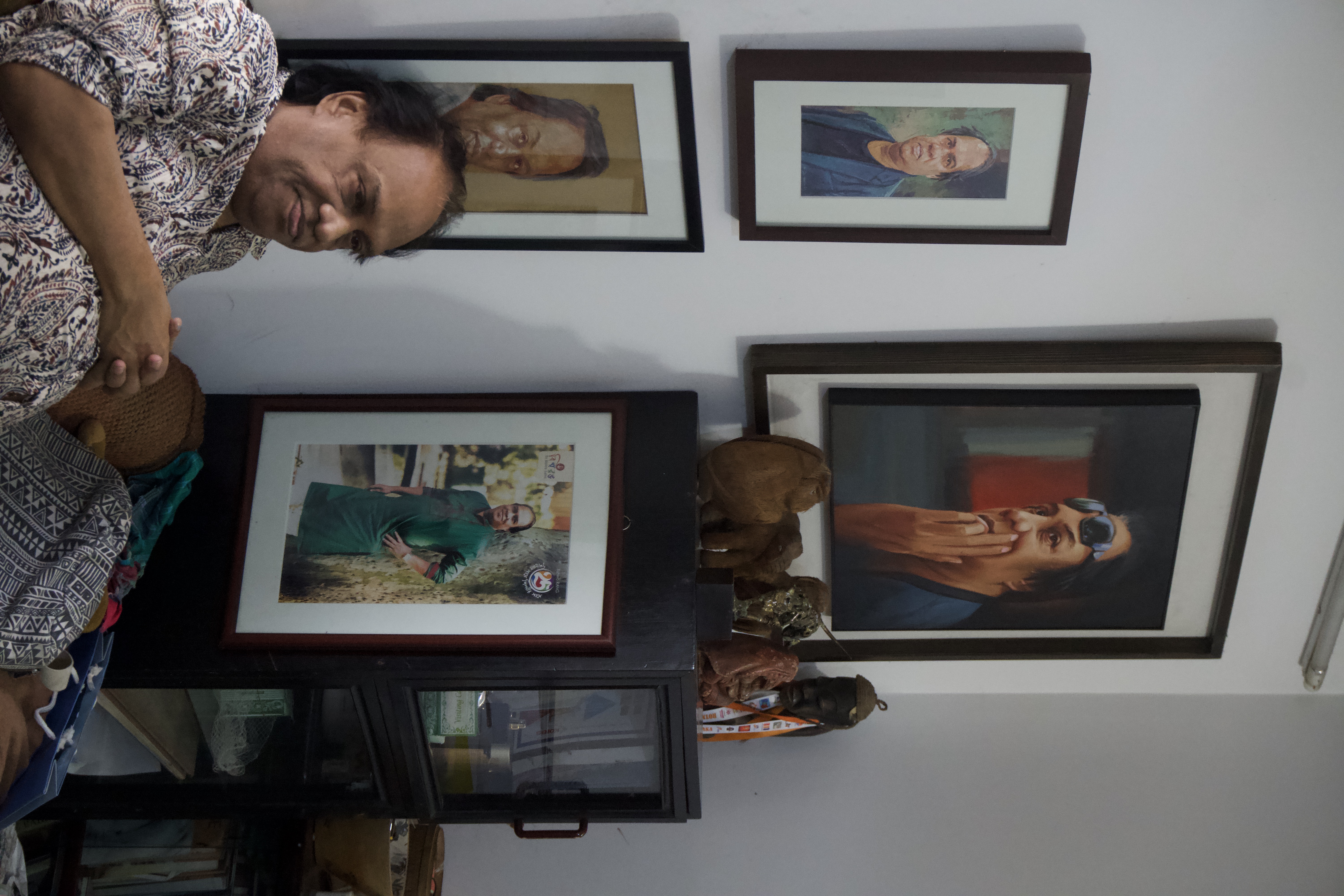
Before entering the apartment, it was clear whose home it was. Beside the entrance hangs a striking portrait of Jamal Ahmed painted by Ratneswar Sutradhar, accompanied by several of his own works and a crafted installation integrated into the doorway. It is a wonderful example of visual communication and thoughtful curation.
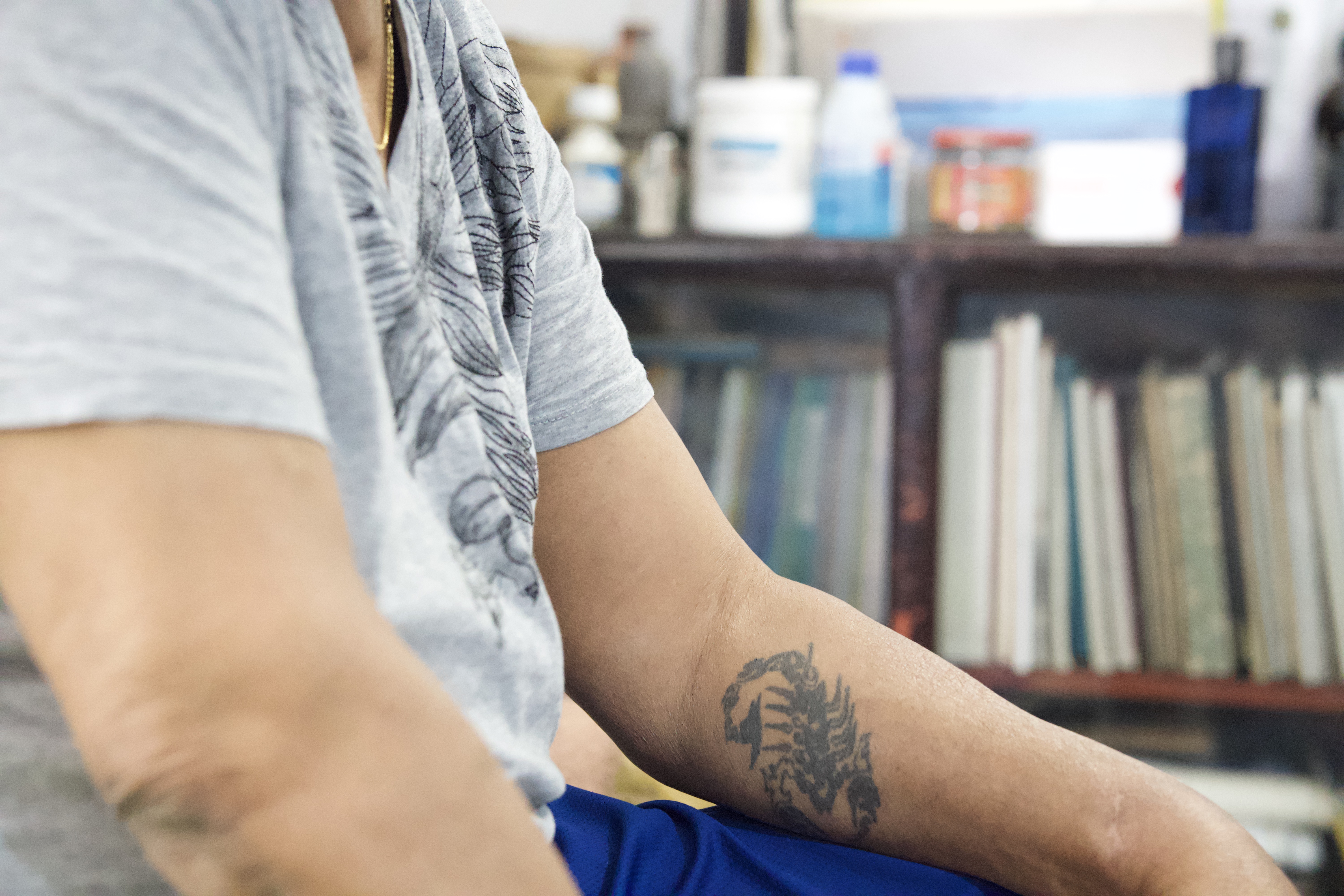
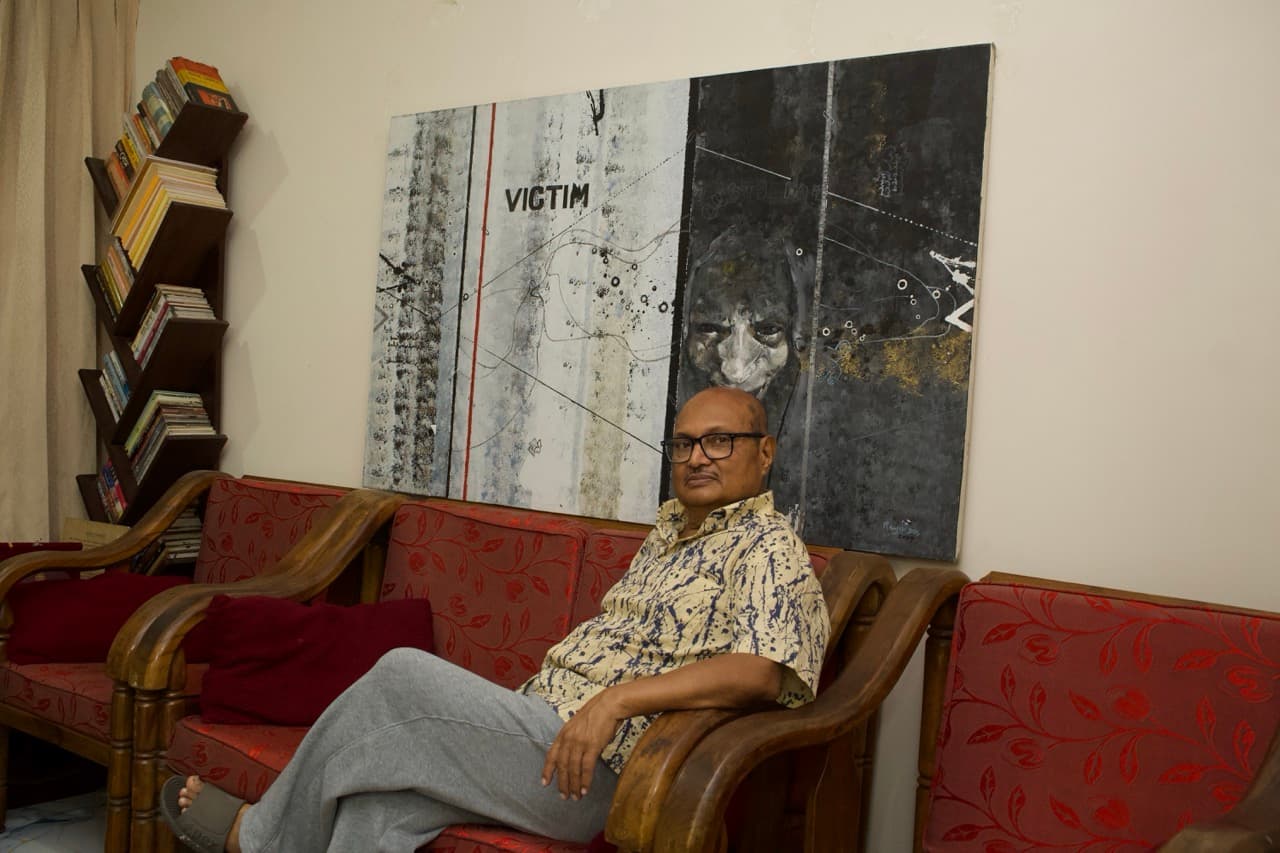
Jamal Ahmed welcomed us with his familiar warm smile, dressed casually in a T-shirt and shorts. Just inside the entrance stood a freshly ongoing portrait of one of his female students. Nearby, a sleeping toy puppy looked so realistic that it took us a few moments to realize it wasn't real. Settled into the drawing room, our eyes wandered across portraits of Jamal Ahmed displayed alongside bookshelves. A tea table sat in the middle of the seating area. Beside it were a stethoscope, a blood pressure monitor, and a first-aid box. It was a quiet reminder that beyond the celebrated artist is an ordinary human being, who is growing older. Yet his youthful energy and cheerful presence filled the room with warmth.
The L-shaped drawing room naturally led our eyes toward his workspace to his bar. One side held his easel, palettes, brushes, and paints; the other featured a bar counter with a large poster of Jamal Ahmed standing behind it.

Facing the bar hung several paintings created during his time in Poland—a nude model, a horse in a city street, and scenes of conversations over whiskey. They felt more like fragments of memory. Though the bar itself is no longer in use, perhaps because time and health have changed daily habits, it remains as part of the studio's history.
Between the drawing room and the bar is a wooden indoor window, where a remarkably lifelike pigeon sculpture rests. At first glance, it seems like a real bird has landed there. It immediately reminded us of Jamal Ahmed's celebrated pigeon series. The sculpture was a gift from a friend who maybe admired those works.
Beside the window hangs a painting by Sultan in an elegant Rococo frame. It was genuinely moving to see the respect with which Jamal Ahmed displays the work. We've noticed this in many senior artists' studios—Sultan is remembered not merely as an influence but as a constant presence. It is always inspiring.
Moving deeper into the studio, we explored paintings from different decades. Canvases leaned against walls, others hung above us, each carrying a different chapter of his artistic journey. We carefully pulled out works that were created long before we were even born. Horses, pigeons, rivers, women, and ordinary people who have long been central to his visual language.
Rup closely examined the surfaces and texture of the paintings, Jamal Ahmed shared that he often mixed sand into the paint to create texture, giving certain works a tactile quality that distinguishes them from others.
Near the bedroom entrance hangs an old photograph of Jamal Ahmed with Shahabuddin Ahmed, reflecting a bonding that stretches back many decades. Nearby is another painting by Jamal Ahmed depicting Shahabuddin and his model from their younger years. We placed the painting on the easel to examine it from a distance, it felt as though we were touching a shared memory rather than simply looking at a work of art. Today Shahabuddin lives in Paris, but one cannot help wondering whether these memories return to him as vividly as they do here.
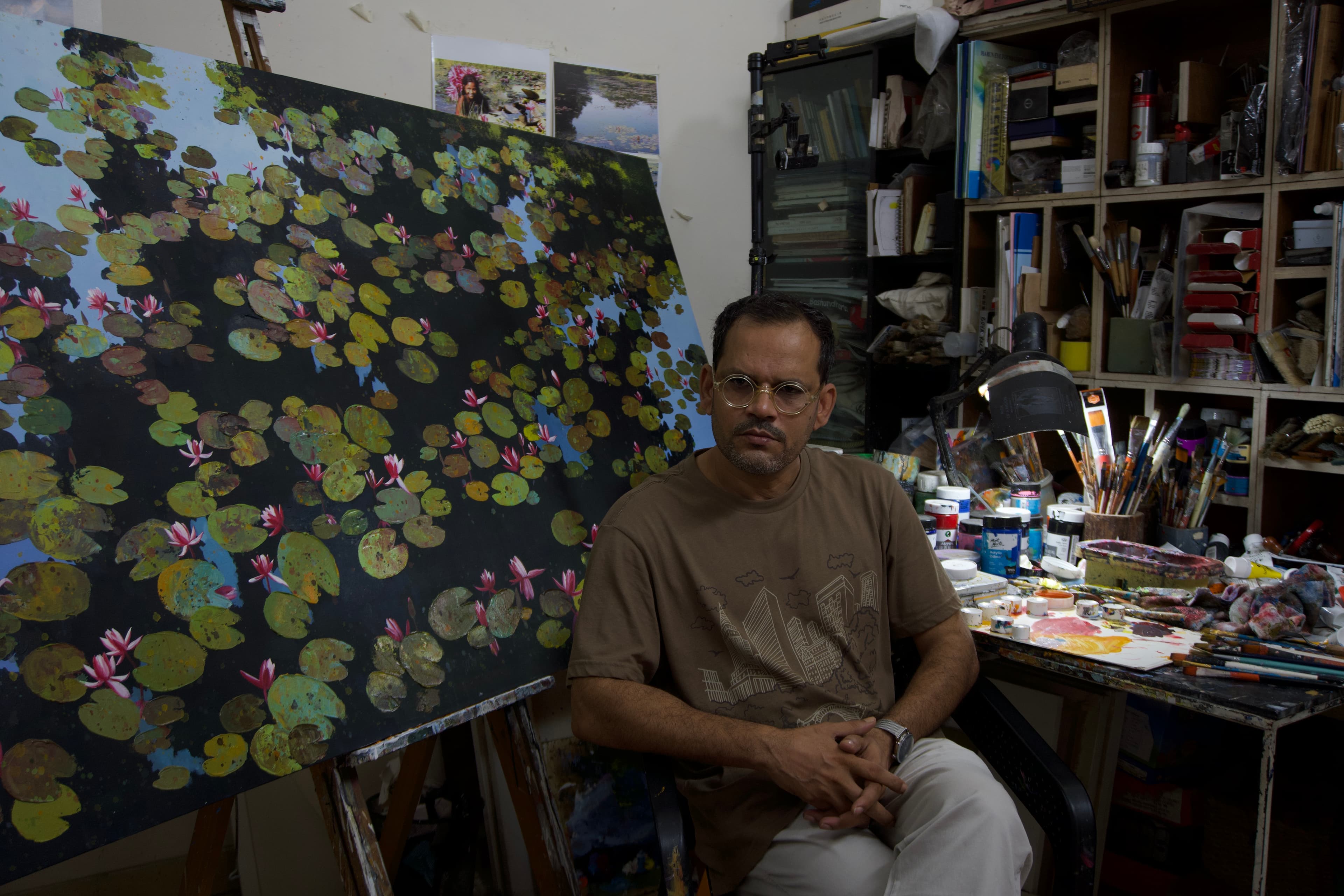
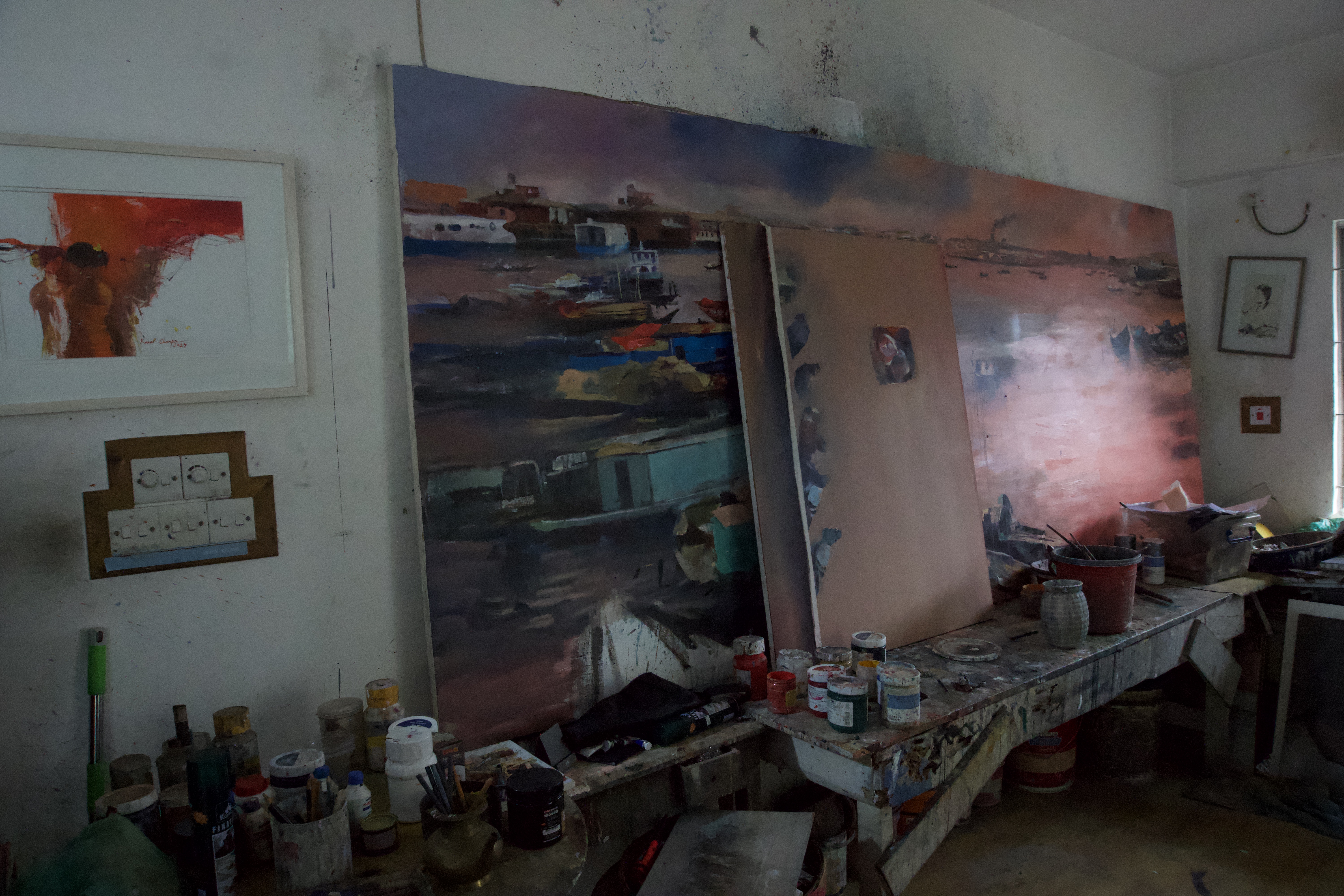
The two large easels in the studio reveal Jamal Ahmed's preference for monumental canvases. Small works are rare. His current painting, measuring nearly four by eight feet, captures Sadarghat during the golden hour, with paddle steamers and the bustling life of the riverfront unfolding across the canvas.
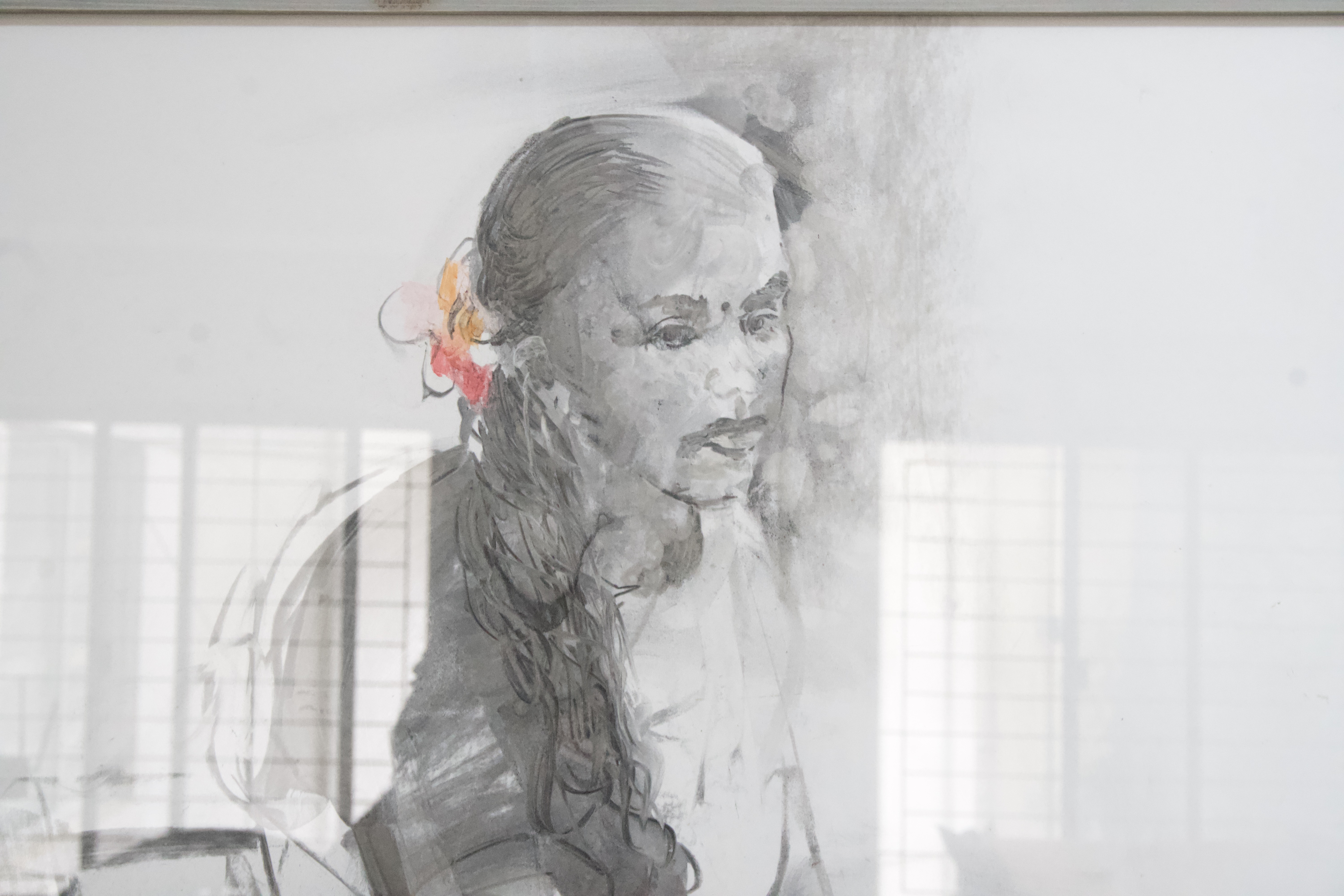
After a few moments we were directly in front of a freshly completed live portrait of one of his students. With only a few confident ink strokes, he had captured an extraordinary likeness, a reminder that mastery often appears effortless.
Perhaps the most fascinating aspect of visiting an artist's studio is the generosity with which artists share their world. They never ask us to look quickly. Instead, they encourage us to spend time with the works, to ask questions, to open old canvases, and to discover forgotten memories. A studio is never just a workplace, it is an archive of an artist's life, where experiments, friendships, struggles, and achievements quietly coexist.
Every studio visit leaves us feeling that we have experienced far more than a collection of paintings. We have walked through an artist's journey, and each journey teaches us to see art with fresh eyes.