Looking or Seeing? Inside Visible Structure.
We often assume that what is visible is all there is to see. Yet perhaps the more important question is not what we look at, but whether we truly see it. The distinction between looking and seeing quietly unfolds throughout Shamsul Alam Azad’s third solo exhibition, ‘Visible Structure’, currently on view at Gallery Chitrak.
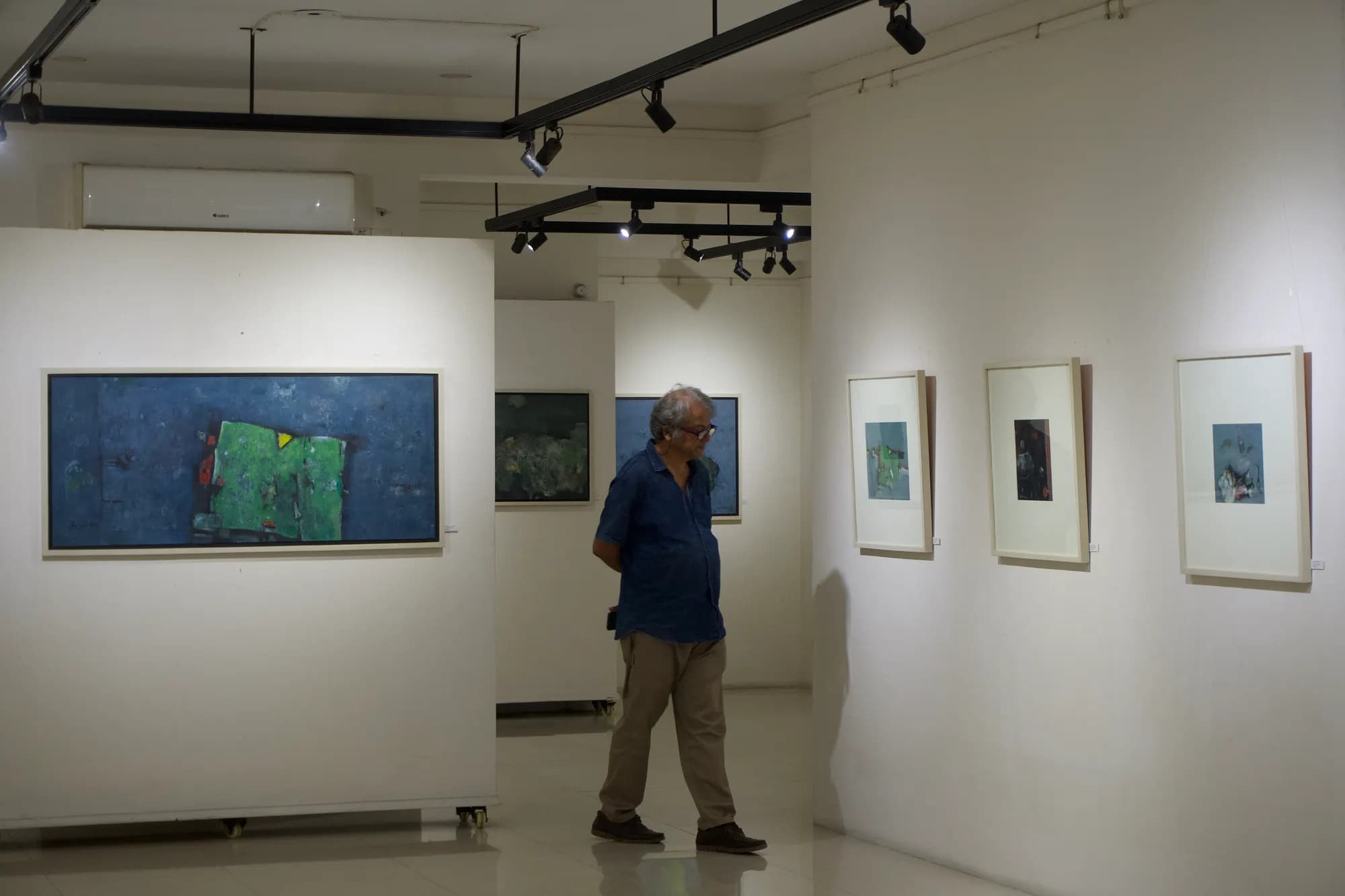
The exhibition does not demand immediate attention. Instead, it requires patience. The gallery remains remarkably calm, allowing visitors to move slowly through the works, free from distraction. There are exhibitions where the cheerful noise of children fills the space, bringing with it a different kind of warmth and vitality. But for an exhibition rooted in abstraction, this quiet atmosphere feels almost essential. It creates the necessary distance for contemplation, allowing the paintings to reveal themselves gradually rather than all at once.
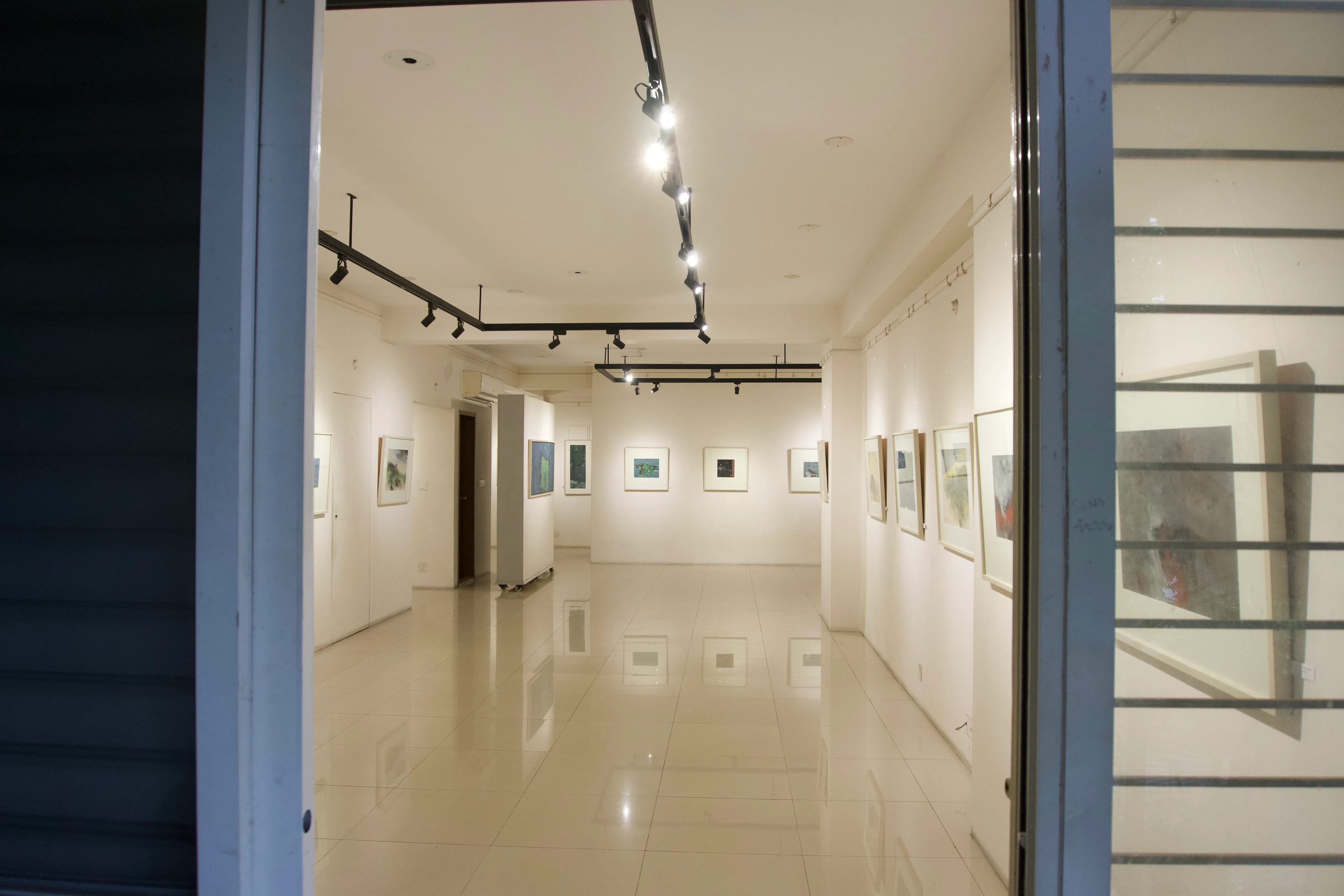
Reading the exhibition catalogue opens another door into the artist’s practice. Every artist arrives at art through a different way of seeing, and Shamsul Alam Azad is no exception. Reflecting on his childhood, he writes:
“Besides humans, the other creatures we encounter — do they possess an artistic sensibility? I believe they do: birds, bees, and even termites. The intelligence that organizes their search for food is, in a sense, their art. What we enjoy often seems to be a fragment of their artistic realm. We separate those fragments and paint them. This childhood thought has never really left me.”
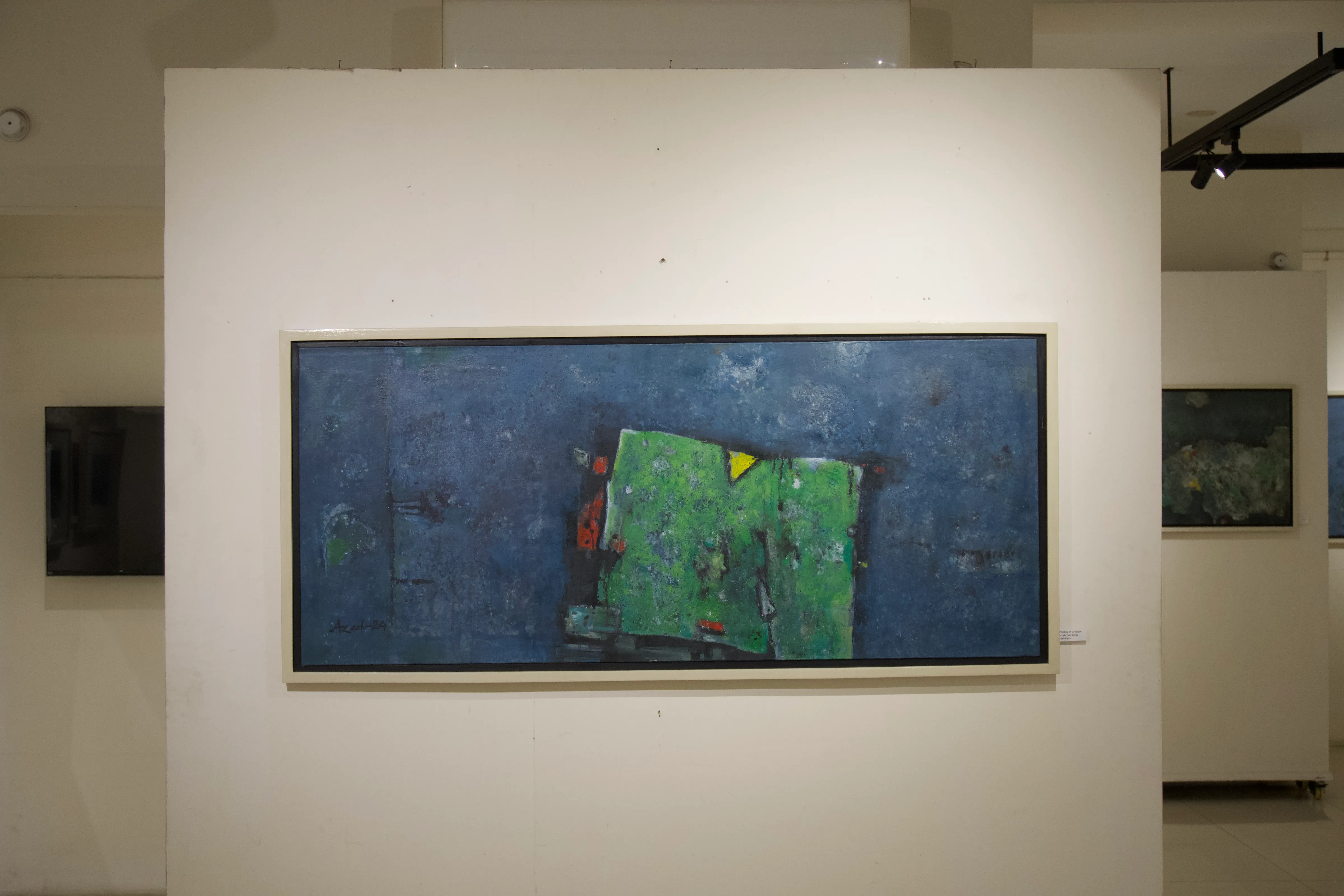
Shamsul Alam describes two distinct paths within artistic practice. One seeks beauty through the understanding of form & structure and the other through perception itself, where objects are experienced beyond their literal appearance. It is within this second path that abstraction emerges.
That philosophy extends beyond the canvas.
He finds extraordinary possibilities within the simplest structures and the most ordinary forms. The same quiet attentiveness that shapes his paintings is equally present in his personality. During the exhibition, he moves gently through the gallery, pausing before his own works with a sense of care rather than ownership.
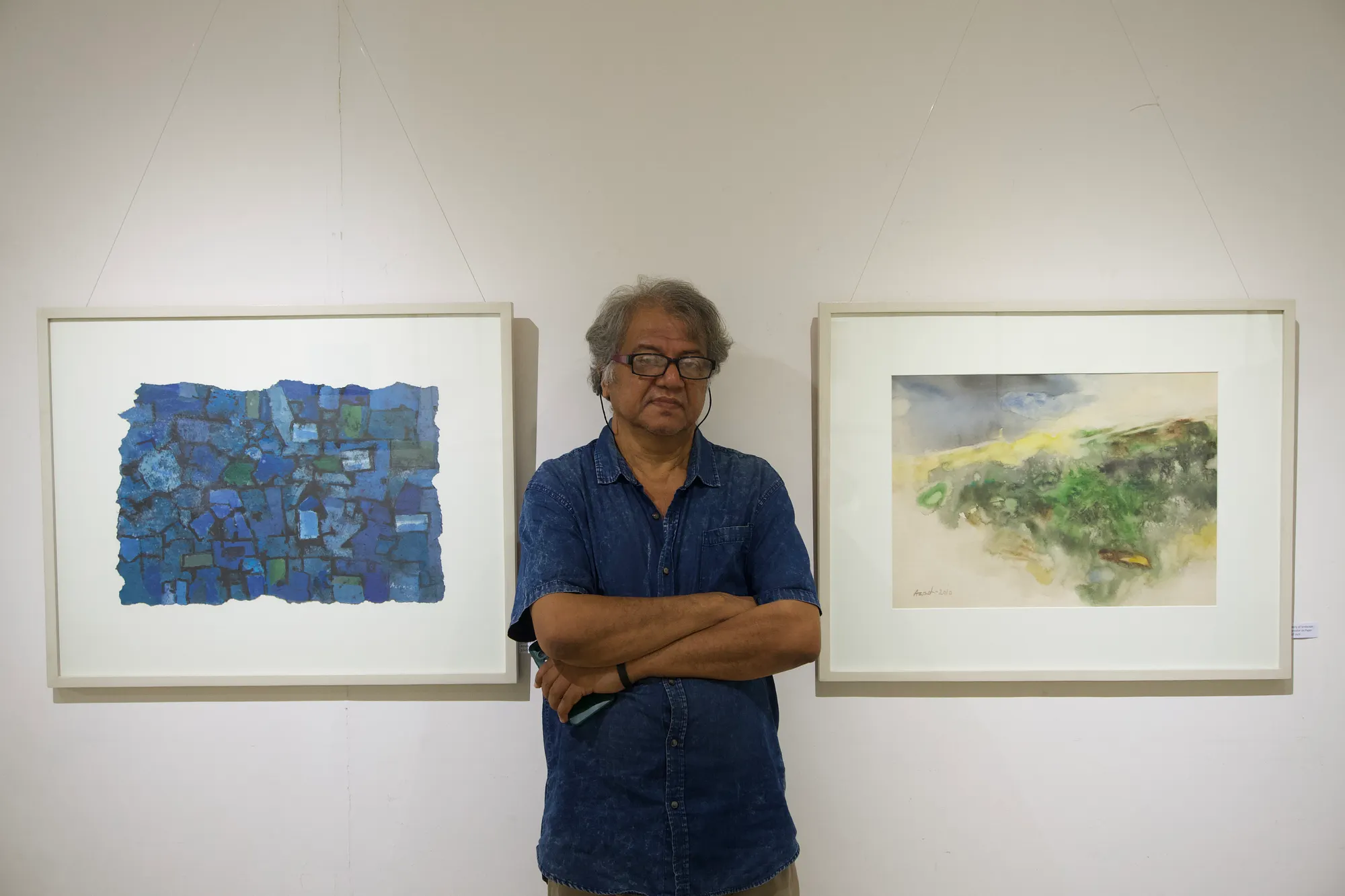
There is a stillness in the way he speaks, and an even deeper silence in the way he looks. It is a silence which carries weight, subtle, contemplative, and perhaps not immediately perceptible to everyone. That same weight quietly permeates ‘Visible Structure’. It is not an exhibition that seeks instant admiration. Rather, it asks for time, for attention, and above all, for a willingness to move beyond simply looking.
Sometimes, the visible structure is only the beginning of what can truly be seen.