Our peasants, The fittest survivors
Sheikh Muhammad Sultan, widely known as S.M. Sultan is one of the most renowned artists who played a crucial role in the development of Modern Bangladeshi Art. He is particularly salient for his artistic approach of representing Bengal peasants as muscular, strong beings of nature. While discussing an artist’s concept, philosophy and artistic vision, it is requisite to first mention his artistic journey, which not only gives an insight into his life but also makes it easier to understand how an artist becomes an artist. While there are many books and articles on this legendary artist, this article tends to revisit as well as reinterpret his concept of forms and the philosophy behind his choice of such a distinctive figural approach that made him renowned as ‘Sultan’ not only at home but also abroad.
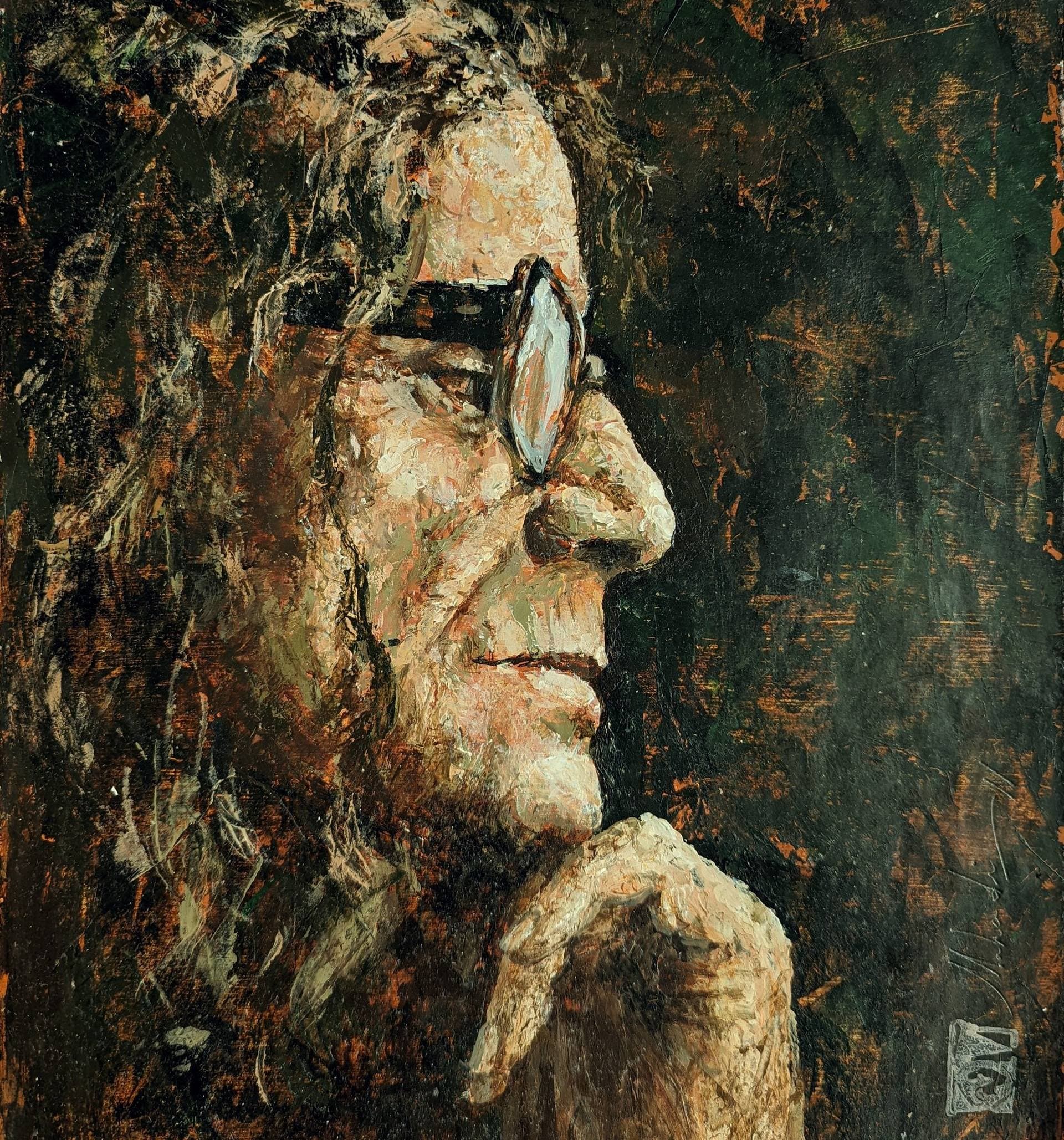
Born on 10 August 1923, in Narail to a poor family, Sultan himself had to work with his father as a mason in childhood along with his father. His strong urge for art was recognized by a local zamindar with whose help he was able to study art in Calcutta Art School in 1938, this marked the beginning of his artistic journey.
But the rules and regulations of academic art couldn’t hold this bohemian artist. He wandered the sub-continent without completing his degree, observing the nature, landscape, lifestyle of the people and even his contemporary master-painters. Landscapes of Bengal and Kashmir in watercolor, as well as figure studies were his subject matters during the 1950s. The Rockefeller Scholarship, and the opportunity to visit galleries and museums in America and Europe.
That's the reason for his exposure to Western art movements enriching his sensibilities which later he absorbed and assimilated into his own style. As a result, Sultan’s early artworks, specifically his landscape paintings, shows a thematic reflection of Bengal school but also depicts technical inspiration of Impressionist style. The visual language of Sultan did not appear on a whim but was a strong consciousness that grew within him from his childhood that reflected throughout his artistic journey. It was in the 1970s when his artistic philosophy took a turn towards more figurative art and depiction of rural Bengal peasants. Frequently categorized as Expressionist and Social-realist for his use of exaggerated yet circular lines and forms to express emotions often mentioned as inner turmoil or his very own subjective perspective that adheres to reality and avoids romantic embellishments, Sultan’s art can’t only be defined as individual western inspiration. It is more of a philosophical view of Sultan’s own stylized depiction that ordinary eyes couldn’t identify than Sultan had.
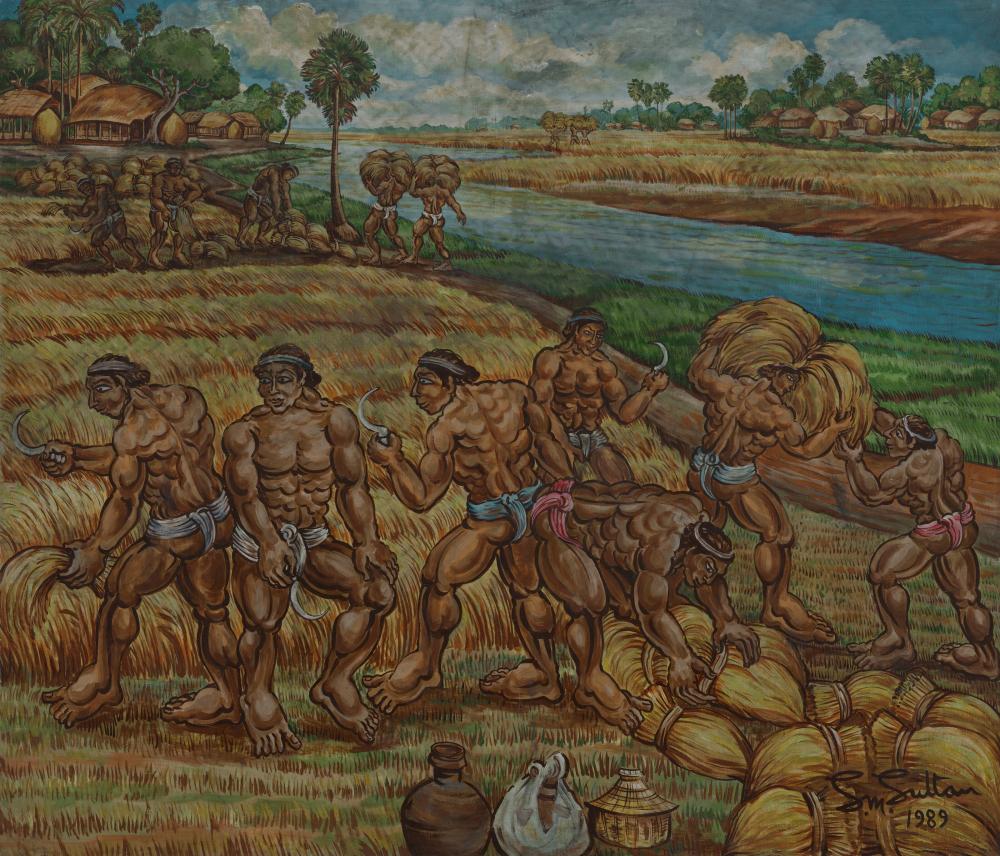
He expressed his imagination, memories, hope and the identity as a representative of Bengal, who does not define the peasants, rural women or even animals as sufferers or struggling beings who need sympathy but the fittest survivors living on earth through the depiction of muscular and strong built bodies. Sultan’s artworks are portrayed as if he is composing literature, depicting occupational fidelity of the working men, in various types of village scenes with abundance of skies, fields, riverbanks, clouds, woods and cottage shelters both receiving the gracious bounties and in suffering wrathful retributions of nature. His ‘My Village’ series are evident that landscapes are not just products of instant viewing, instead they revolve in fast and fine movements of growth and on large canvases the interplay of light on them becomes the motif of his composition.
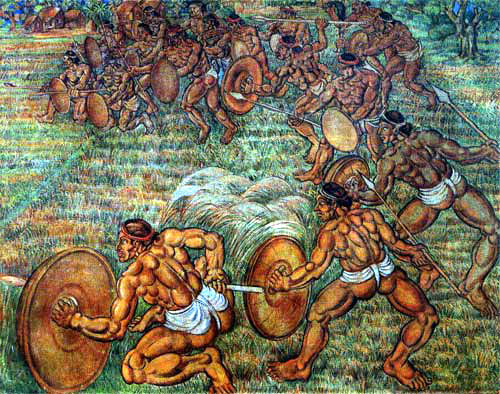
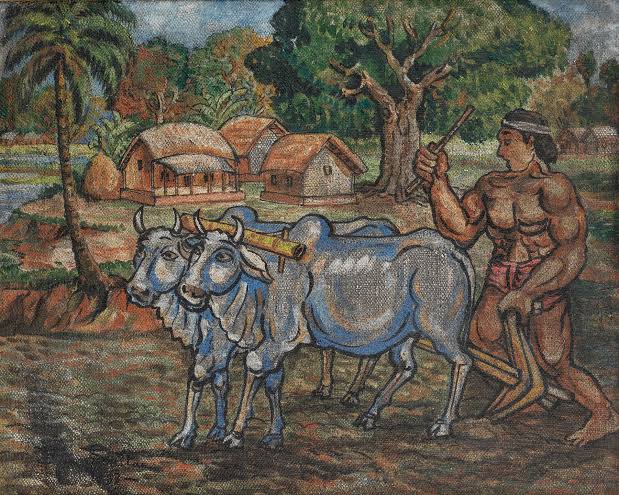
Every artwork of Sultan captures the unity of the Bengal peasants as they are depicted working together. The artwork such as Ploughing-2 showcases the imagery of farmers in paddy fields plowing with oxen. The soil is glorified by its shape and detailing, expressing its own individuality and contribution for the people and country. The whole artwork is not a static painting but Sultan wanted to create an illusion of rhythmic movement of the subjects. The use of a strong intense palette of earthy tone symbolizes the deep emotional ties that farmers have with their land and environment.
Female figures of Sultan’s paintings don't suffer from inequality, as they are also portrayed as muscular, strong beings, but with slight round shapes that wholly doesn’t identify them identical to men. There is a softness along with ethereal appearance in female figures, found in the paintings such as ‘Hair Dressing’ and ‘Husking Rice’. A reflection of Kalighat painting is also evident in their graceful curves and drapery, but it is Sultan’s own romanticism of beauty that brings out the elegance, rural women behold living within nature.
For Sultan, the agrarian people of Bangladesh were his inspiration to embody his vision of resilience and finding true peace in the life within nature rather than city lifestyle. His artistic vision was a process of manifesting his philosophy of life which not only became his concept but also a signature style that made him ‘Sultan’ who is and will be celebrated for eternity.