Inside the Dreamscape of Salvador Dalí
Salvador Dalí was more than a painter. He saw the disturbance inside reality. Some artists paint what they see and they paint beauty…
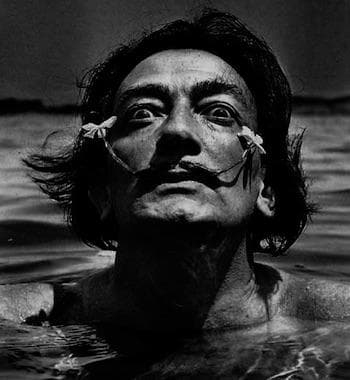
Salvador Dalí was more than a painter. He saw the disturbance inside reality. Some artists paint what they see and they paint beauty, document history. But Dalí painted the hidden dilemma of the human mind. He painted fear, obsession, desire, decay, loneliness, dreams, and the strange silence that exists between sleep and consciousness. Looking at his artworks feels like watching reality melt in front of your eyes.Salvador Dali
On May 11, the world remembers Salvador Dalí’s birthday. But celebrating Dalí is not simply about remembering a surrealist master. It is about remembering an artist who refused to let art remain safe, polite, or predictable.
Dalí understood the inner things which many artists still struggle to realize. Reality is not always truthful. Sometimes dreams reveal more paths and honestly for the running world. That belief became the foundation of his art.
At first glance, Dalí’s paintings appear impossible. Melting clocks, Burning giraffes, Floating objects, Endless deserts filled with distorted human forms. Everything feels familiar, but deeply uncomfortable. His works create a strange psychological tension where the viewer can recognize the world but cannot fully trust it anymore.
Press enter or click to view image in full size
Press enter or click to view image in full size
That is exactly where Dalí’s power exists.
Dalí did not want viewers to admire his paintings. He wanted them to enter uncertainty, feel like a dream where logic slowly collapses and emotions begin speaking louder than reason. His surrealism was not decoration. It was a confrontation. That’s why Dalí still feels relevant today.
Now we live in a world obsessed with speed, clarity, and instant consumption. Images appear and disappear within seconds. Art is often reduced to content. Everything must be easily understandable, marketable and digestible. But Dalí’s works refuse simplicity. They force people to stop and stare. They create discomfort and demand interpretation. True art sometimes disturbs people.
Dalí understood that beneath civilization exists chaos. Beneath beauty exists fear. Beneath confidence exists fragility. His paintings repeatedly expose these hidden tensions. Ants crawling over the flesh, distorted anatomy, empty landscapes, melting forms, these are not random surreal images. They are psychological symbols. They represent anxiety, mortality, desire, and the instability of human existence itself.
Dalí painted the subconscious before modern society fully learned how to speak about mental complexity. What fascinates me most about Dalí is his fearlessness toward imagination. He did not try to appear rational all the time. He embraced irrationality openly and accepted the contradiction with allowing mystery to exist inside his works without forcing explanation.
Today, that feels revolutionary. Modern people are constantly pressured to explain, categorize and simplify themselves. But Dalí moved in the opposite direction. He made complexity larger and transformed confusion into visual poetry. He showed that not every meaningful thing can be translated into direct language.
Artists feel deeply connected to that idea. Because sometimes emotions cannot be explained logically. Some feelings arrive like fragments. Some memories behave like dreams and some fears appear without shape. Dalí understood these invisible experiences and gave them physical form through painting. That’s why his works feel alive even now.
Press enter or click to view image in full size
At the same time, Dalí himself was almost like a performance artwork. His dramatic personality, unusual appearance, and theatrical behavior made him appear larger than life. Many people saw arrogance in him. Others saw madness. But behind all of that existed extraordinary discipline and technical brilliance. His paintings were executed with astonishing precision. Every texture, shadow, reflection, and composition was controlled carefully. This contrast between technical realism and psychological absurdity made his works unforgettable. Dalí made impossible things which felt believable.
Dalí’s greatest achievement was his refusal to separate imagination from truth. Society often treats imagination as escapism, as if dreams are somehow less important than reality. Dalí challenged that idea completely. He believed the subconscious mind carries its own truths, perhaps even deeper truths than ordinary life allows us to see. And honestly, looking at today’s world, he was right.
People are becoming more disconnected from themselves. Noise is everywhere. Information is endless and self-reflection is disappearing. Dalí’s artworks feel important because they force viewers to confront their own inner landscapes. His paintings are not passive images hanging silently on walls. They behave like psychological mirrors.
Sometimes disturbing. Sometimes beautiful. And impossible to fully understand. But they are always alive.
Salvador Dalí did not simply create surrealism. He transformed it into a language of the subconscious. He expanded the possibilities of visual thought itself. Very few artists change how people see reality. Dalí was one of them.
On his birthday, he deserves more than admiration. He deserves gratitude. Salvador Dalí reminded the world that art is not about what we see with our eyes. It reveals the invisible parts of ourselves that language alone can never fully explain.